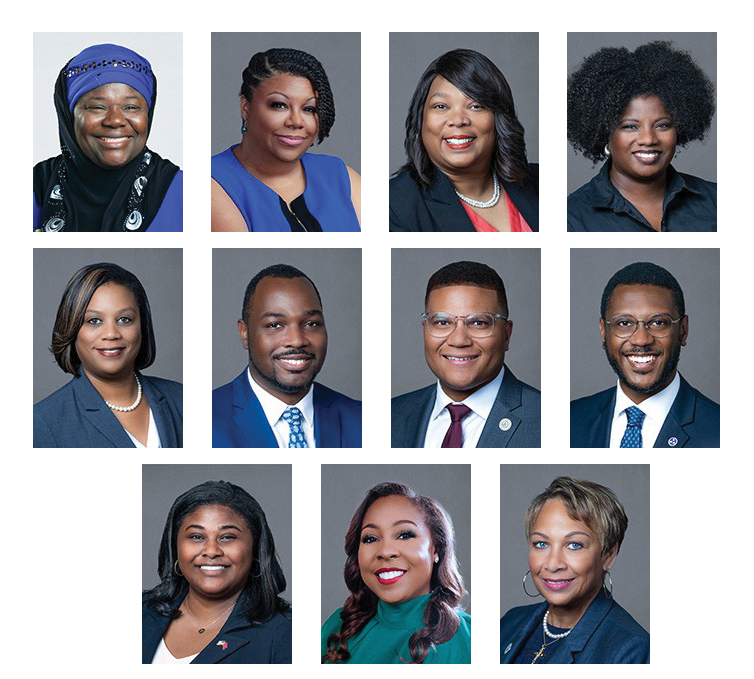
As Nashville concluded its Juneteenth weekend, Black members of the Metro Council took a historic step by reviving the Metro Council Black Caucus—a group dedicated to addressing issues that disproportionately affect the city’s African American residents. The move marks a renewed commitment to ensuring the voices of Black Nashvillians remain central in city governance.
The Black Caucus traces its roots to 1951, when Z. Alexander Looby and Robert E. Lillard became the first Black members elected to the Metro Council. Known for their courage and tenacity, the duo fought for equity in public safety, education, housing, and voting rights, often in the face of significant opposition. Their legacy laid the groundwork for future Black leaders in Nashville’s political landscape.

While Black council members formally organized into a caucus in the early 2000s, the group evolved into the broader Minority Caucus in 2011, representing a coalition of Black and immigrant council members. The Minority Caucus will continue its work on behalf of communities of color, but members say a dedicated Black Caucus is needed once again to focus on challenges that are distinct to African American communities.
“This is coming at a needed time in Nashville,” said Councilwoman Jennifer Gamble, who will chair the revived Black Caucus. “The impact of zoning laws, gentrification, and displacement are top of mind for me. The after effects of segregation can still be felt today, especially when it comes to access to affordable housing.”
The caucus consists of 11 council members who aim to develop legislation and policy that directly address the needs of Black residents. Council Member Antoinette Lee will serve as vice chair, with Council members Brandon Taylor as treasurer, Tasha Ellis as secretary, and Jeff Preptit as parliamentarian.
“This Black Caucus stands on the shoulders of civil rights leaders who came before us,” Gamble said. “What we’re trying to do is bring back that bold leadership and energy to continue tackling the same systemic issues—this time, with renewed urgency and focus.”
Democratic strategist Jasper Hendricks said: “The goal is to focus on legislation that can help improve outcomes for African American communities.”
For questions or more information about the Black Caucus, contact Chair Jennifer Gamble at <jennifer.gamble@nashville.gov>.