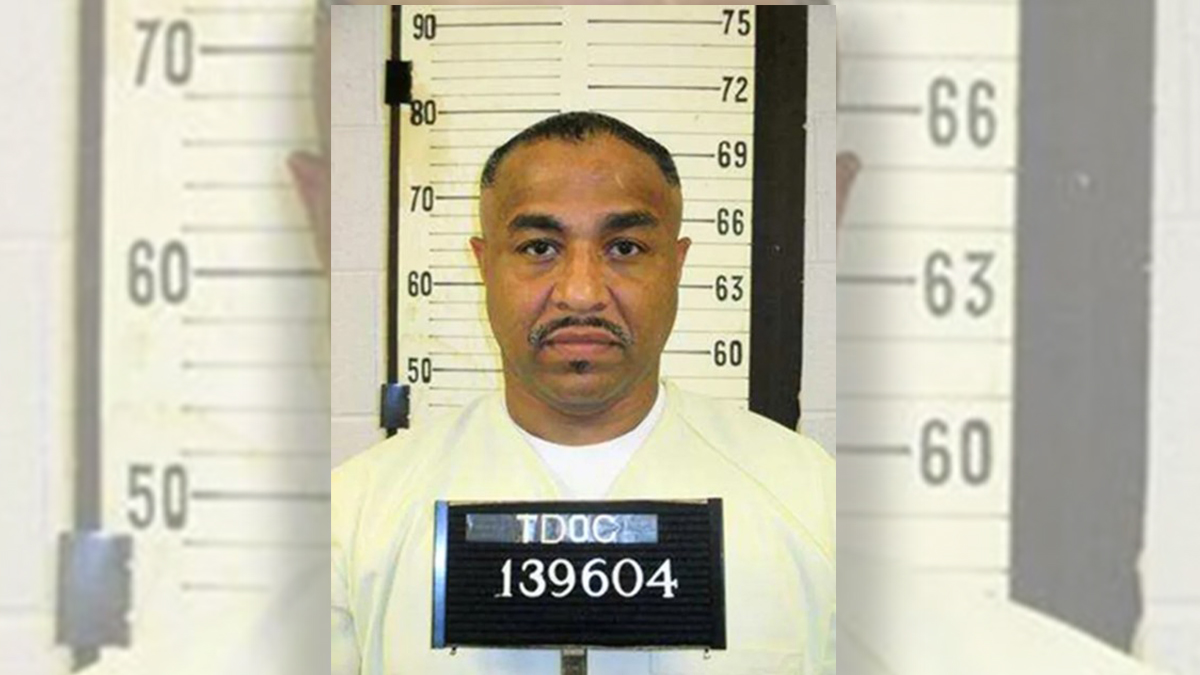
A coalition of death row exonerees, civil rights advocates and innocence organizations is urging Gov. Bill Lee to halt the scheduled execution of Tennessee death row inmate Tony Carruthers while courts consider requests for DNA testing that supporters say could prove his innocence.
The push intensified following a Nashville press conference organized by the Tennessee Innocence Project and members of Witness to Innocence, a national group founded by formerly incarcerated death row prisoners later exonerated.

Advocates argue the state should not move forward with Carruthers’ May 21 execution while key forensic evidence remains untested.
“Without the court ordering the DNA testing in my case, I would not be standing here today,” said Ray Krone, the nation’s 100th death row exoneree and a Tennessee resident. “If untested evidence like DNA exists that could save an innocent person’s life, we have a duty to test it.”
Carruthers was convicted and sentenced to death in Shelby County in 1996 in connection with the 1994 kidnapping and killings of Marcellos Anderson, Delois Anderson and Frederick Tucker.
Supporters of Carruthers maintain there was never any physical evidence tying him directly to the crime scene. Prosecutors instead relied heavily on testimony from jailhouse informants, including one witness who was later revealed to have been a paid confidential informant for the state.
According to filings by attorneys with the American Civil Liberties Union, the state denied for decades that the informant had received compensation.
More than 20 pages of records released in 2024 reportedly showed signed confidential informant agreements and payment ledgers connected to the witness.
Carruthers’ attorneys have also pointed to fingerprint and DNA evidence recovered from the crime scene that does not match him.
His legal team is seeking court approval to compare unidentified DNA and fingerprints to another suspect named by Carruthers’ co-defendant, James Montgomery, who later signed a statement claiming Carruthers was not involved in the murders.
That suspect, Ronnie Irving, died in 2002, but attorneys say fingerprints and DNA samples remain on file with the medical examiner’s office.
“Before the state carries out an irreversible punishment, it must answer the most basic question: did they get the right person,” said Maria DeLiberato, senior counsel with the ACLU’s Capital Punishment Project. “There is no justification for barreling toward an execution while DNA evidence that could prove who really committed this crime remains untested.”
The case has also drawn renewed scrutiny because Carruthers represented himself during portions of his capital murder trial after repeated conflicts with court-appointed attorneys.
Court filings describe Carruthers as suffering from longstanding mental illness and argue he did not voluntarily seek self-representation. His attorneys say the trial was plagued by severe legal errors and ineffective defense strategy.
In separate filings earlier this year, Carruthers’ legal team argued he is mentally incompetent for execution under U.S. Supreme Court precedent prohibiting the execution of individuals unable to rationally understand the reason for their punishment.
Attorneys cited documented psychiatric disorders and what they described as severe delusional thinking.
The Tennessee Innocence Project said the case raises broader concerns about wrongful convictions and the irreversible nature of the death penalty.
“When a person is sentenced to death, the stakes are too high to get it wrong,” Tennessee Innocence Project Executive Director Jason Gichner said. “DNA testing is both accurate and efficient. No execution should ever go forward when there is evidence available to test that can establish innocence.”
Civil rights and innocence advocates continue calling on Gov. Lee and state officials to pause the execution until all forensic evidence can be fully examined.