Fisk University has announced a sweeping $1 billion campus master plan that university leaders say will transform the historic institution over the next decade while strengthening its role as a center for innovation, education and economic development in North Nashville.
The initiative, called ‘Quantum Leap,’ represents the largest campus investment in Fisk’s 160-year history and outlines a long-term strategy to modernize facilities, expand academic resources and create new opportunities for students and the surrounding community.

University officials unveiled the plan on May 14, describing it as a roadmap designed to ensure the institution’s sustainability and growth for generations to come.
“For more than 160 years, Fisk University has played a leading role in shaping some of the nation’s brightest minds, cultivating leaders, expanding access to education and stewarding American history,” said Fisk President Agenia W. Clark. “Quantum Leap represents our commitment to building upon our storied legacy while paving the way for sustained growth to ensure Fisk continues to empower its students, faculty and community.”
The multi-decade development plan is expected to bring an estimated $1 billion in investment to North Nashville, making it one of the most ambitious redevelopment efforts tied to a local university in the city’s history.
A major centerpiece of the project is a planned $400 million Innovation Center that will be built on the southern end of Fisk’s campus. University leaders said the facility is designed to expand access to advanced technology, interdisciplinary learning and workforce development opportunities.
The proposed 100,000-square-foot center will include 30,000 square feet dedicated to academic instruction and research space, along with a 70,000-square-foot technology center designed to support new and existing technology-focused programs.
Officials say the Innovation Center will also prioritize sustainability by incorporating energy-efficient technologies intended to reduce water consumption, greenhouse gas emissions and long-term environmental impact.
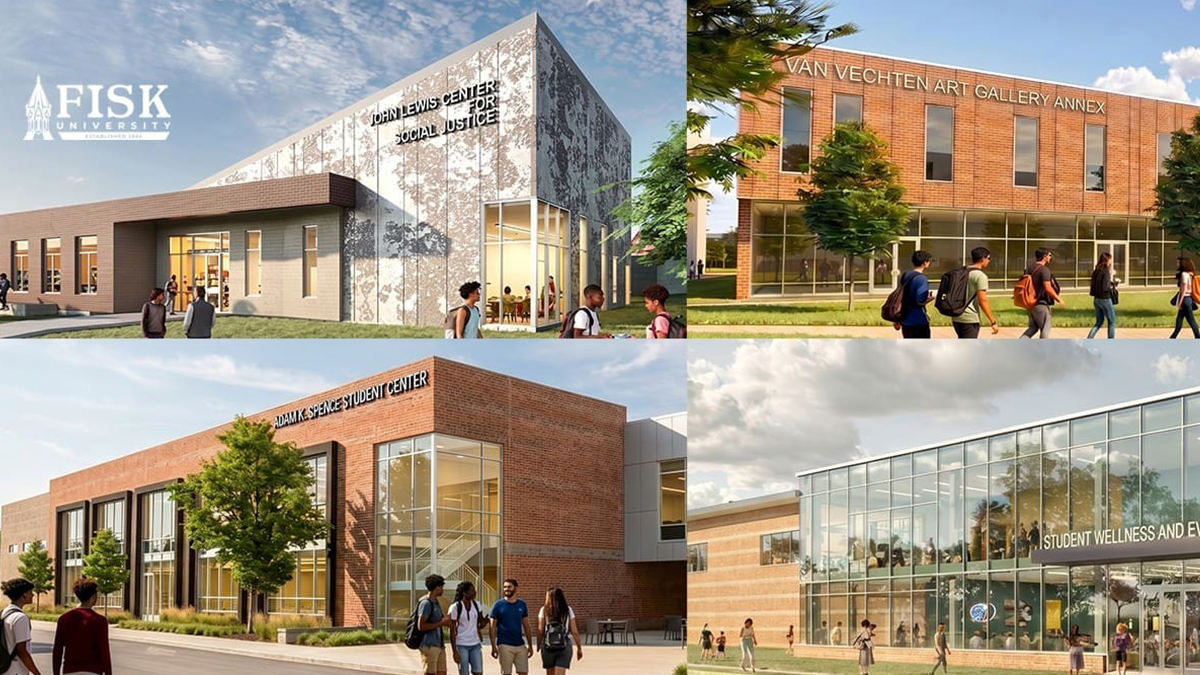
The broader master plan includes extensive campus upgrades intended to improve student life and academic opportunities. Proposed improvements include renovated residence halls, a new Fisk Arena, a modern student center, expanded parking and updated classroom and learning spaces.
Fisk also plans to expand the John Lewis Center for Social Justice and the Carl Van Vechten Art Gallery through the addition of new academic, research and instructional space for students and faculty.
University officials said the plan was developed with input from students, faculty, alumni and board members and is intended not only to improve the campus experience but also strengthen Nashville’s future workforce pipeline.
“Reflecting Fisk University’s commitment to academic excellence and constant advancement, Quantum Leap emboldens Fisk to embrace its next chapter of institutional growth and innovation,” said Fisk Provost Brian L. Nelms. “With access to state-of-the-art technology, enhanced learning spaces and greater academic capabilities, Fisk will be able to offer its students unparalleled learning and training opportunities, and Nashville will be poised to grow its skilled workforce.”
The university said the project is designed to create benefits beyond the campus itself by generating educational and economic opportunities throughout North Nashville.
Construction tied to the master plan is expected to unfold over 10 years or more, with work beginning immediately. The first phase of the project will focus on expanding the John Lewis Center for Social Justice, a move university leaders say reflects Fisk’s long standing mission of promoting equity, civic engagement and leadership.
Founded in 1866, Fisk University remains one of the nation’s most historic Historically Black Colleges and Universities and has produced generations of influential leaders, artists, scholars and activists.
University leaders say the ‘Quantum Leap’ initiative is intended to position Fisk as a national leader in higher education innovation while preserving its historic legacy and deep connection to the Nashville community.