Rep. Steve Cohen exits re-election race as Tennessee redistricting fight intensifies

Steve Cohen ends TN 9th District re‑election bid as Tennessee’s redistricting fight threatens Memphis’ Black voting strength and Democratic representation.

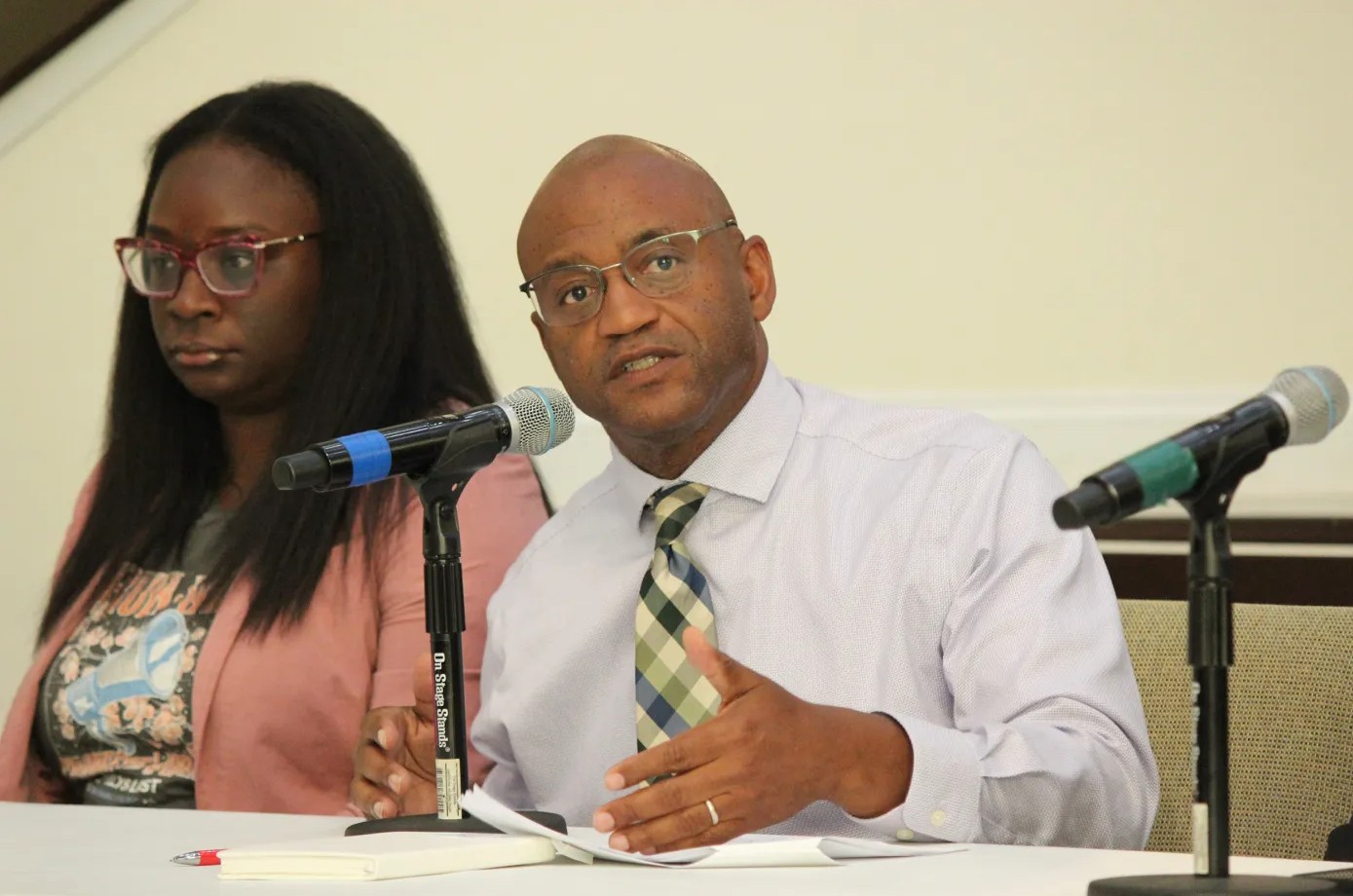
Rep. Steve Cohen, second from (l), in redistricting planning session with Stacey Abrams of Georgia (l) and other Memphis politicians and leaders.

Longtime Memphis Congressman Steve Cohen announced he is withdrawing from Tennessee’s 9th Congressional District race, becoming the most prominent political casualty so far of Tennessee Republicans’ controversial redistricting overhaul.

Cohen’s decision comes amid an escalating legal and political battle surrounding newly approved congressional maps that dismantle Tennessee’s longtime majority-Black congressional district centered in Memphis. The maps, approved during a special legislative session and signed by Gov. Bill Lee, split Memphis into multiple districts stretching deep into rural and suburban parts of the state. Critics argue the move was designed to dilute Black voting strength and eliminate Democratic representation in Tennessee’s congressional delegation.

In announcing Cohen’s withdrawal, the Tennessee Democratic Party sharply criticized the new maps and praised the congressman’s years of service.

“We are forever grateful for Congressman Cohen’s tireless dedication, leadership, and service,” Tennessee Democratic Party Chair Rachel Campbell said in a statement. “He carried Tennessee into rooms where our voices might not otherwise have been heard.”

Cohen, who has represented Memphis in Congress since 2007 and spent more than two decades in the Tennessee Senate before that, said the newly drawn districts made reelection increasingly unrealistic.

“These districts were drawn to defeat me,” Cohen said while discussing the redistricting changes.

For decades, Congressional District 9 has served as Tennessee’s only majority-Black congressional district and the state’s primary Democratic stronghold. Civil rights groups and Democratic leaders argue the new map intentionally fractures Memphis’ Black voting population across several Republican-leaning districts.

The NAACP, alongside the Tennessee State Conference NAACP and other groups, has filed a federal lawsuit challenging the maps, alleging violations of the Fourteenth and Fifteenth Amendments.

“Tennessee lawmakers deliberately dismantled the state’s only majority-Black congressional district,” the organization said in a statement announcing the lawsuit.

The lawsuit argues lawmakers rushed the maps through the legislature while ignoring traditional redistricting principles and public input. Civil rights advocates have compared the redistricting effort to historical voter suppression tactics used during the Jim Crow era.

The legal fight suffered an early setback when U.S. District Judge William Campbell, Jr. denied a temporary restraining order that sought to block the new maps before candidate qualifying deadlines. However, the court did not rule on the broader merits of the case, and the lawsuit remains active.

Tennessee Democratic Party Communications and Deputy Executive Director Luis Mata said Democrats intend to continue challenging the maps in court and through organizing efforts statewide.

“One procedural decision does not change what these maps are: racist, reckless, and wrong,” Mata said. “They can split the district lines, but they cannot split the power of the people.”

The political tensions surrounding the redistricting debate spilled directly onto the Tennessee House floor during the special session. Protesters filled the Capitol gallery while Democratic lawmakers linked arms and demonstrated against the maps during debate.

Days later, Tennessee House Speaker Cameron Sexton removed Democratic lawmakers from committee assignments, accusing them of helping encourage disorder during the protests.

State Rep. Justin Jones criticized the disciplinary action and described it as part of a broader pattern of retaliation and racial discrimination.

Cohen has indicated he could reconsider his decision if courts temporarily halt the new maps before the 2026 elections, though he acknowledged such an outcome remains uncertain.

The redistricting effort follows a recent Supreme Court decision weakening portions of the Voting Rights Act, prompting several Republican-led states to revisit congressional maps ahead of the midterm elections. Political analysts say Tennessee’s changes could position Republicans to potentially control all nine of the state’s congressional districts moving forward.

Cohen warned that removing Tennessee’s lone Democratic voice from Congress could eventually hurt the state politically when national leadership changes.

“What you’re taught in civics classes is redistricting should be compact districts—districts where the people in it have a commonality of purpose and interests,” Cohen said. “There is no commonality of interests” in the new districts.

Leave a Reply

Forgotten Origins: Memorial Day Rooted in Formerly Enslaved Americans

A 1865 Charleston ceremony by freed Black residents may be the first organized Memorial Day, tying the holiday’s origin to the end of slavery and

Nashville will host Super Bowl LXIV in 2030 at new Nissan Stadium

Nashville will host Super Bowl LXIV in 2030 at the new Nissan Stadium, as the NFL selects Music City for its first-ever Super Bowl and

Former O.J. Simpson detective Mark Fuhrman dies at 74

Former LAPD detective Mark Fuhrman, a central figure in the O.J. Simpson murder investigation and trial, has died at age 74 in Idaho after a

Rep. Jason Powell criticizes new congressional maps, calls for courts to block implementation

Jason Powell criticizes Tennessee’s congressional redistricting, saying it fragments Southeast Nashville’s diverse neighborhoods and calls for courts to block the new maps.

Amidst national voting rights fight, Va. Rep. Bobby Scott urges Hampton U. grads to get politically involved

Rep. Bobby Scott tells Hampton University graduates they must fight for voting rights and HBCU funding amid a national push to erode equity in elections