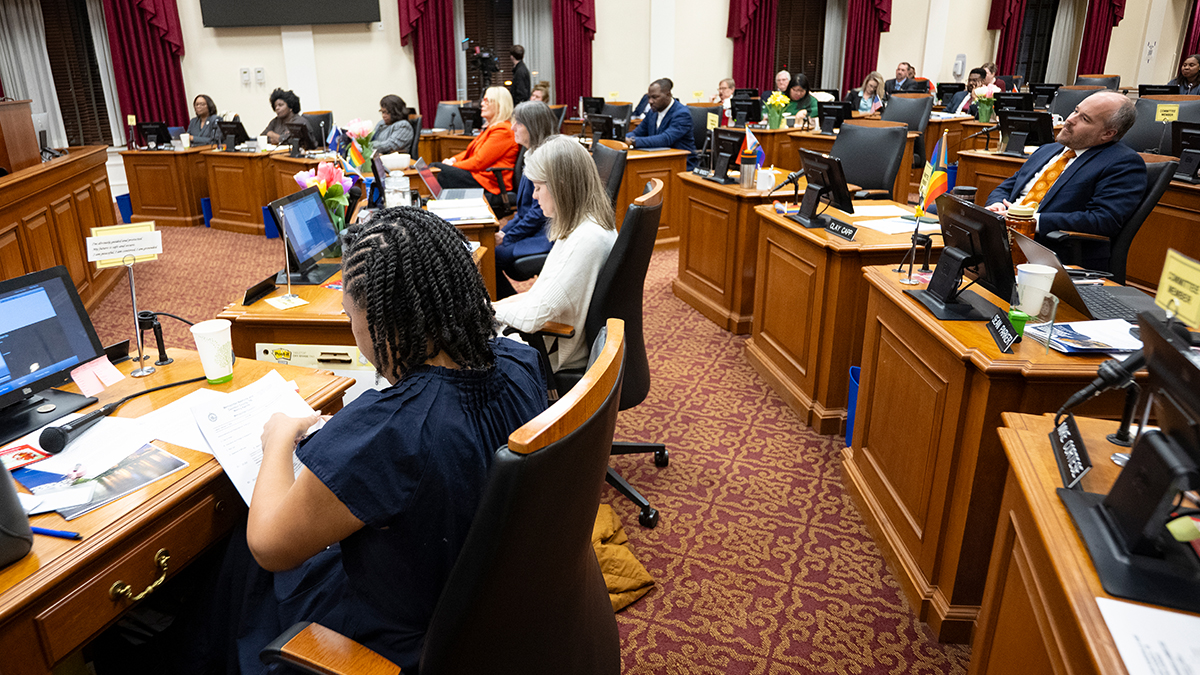
A Tennessee Supreme Court ruling upholding a state law that requires Nashville to reduce its 40-member Metro Council to no more than 20 members has sparked new concerns about minority representation, local control and the future of city government.
The decision, issued November 2, ends a major chapter in a three-year legal battle between Nashville and Republican state lawmakers. However, it leaves unanswered when the reduction must take effect and how the city will redraw its political districts.
Nashville currently has 35 district council members and five at-large representatives elected countywide. The council has maintained that structure since the consolidation of Nashville and Davidson County governments in 1963.
The larger council was part of a political compromise that helped secure support for consolidation and created additional opportunities for Black political representation.
Reducing the council by half could significantly alter that representation, particularly in historically Black neighborhoods where residents have relied on district council members to advocate for community interests.
The controversy began after the Metro Council rejected a proposal in 2022 to pursue hosting the 2024 Republican National Convention. State lawmakers subsequently approved several measures affecting Nashville’s local government, including the 2023 law limiting metropolitan councils to 20 members.

Supporters argued the legislation would promote efficiency and reduce the size of government. Although written to apply statewide, Nashville was the only metropolitan government with more than 20 council members.
State Rep. William Lamberth, R-Portland, who sponsored the legislation, celebrated the Supreme Court decision as a “big win for small government and common sense.”
Nashville officials, however, have argued that the law infringes on the city’s authority to govern itself.
Mayor Freddie O’Connell said the administration would review its legal options and “keep fighting for Nashville’s right to govern itself.”
Vice Mayor Angie Henderson described the decision as a “somber day for democracy in Tennessee.”
The Supreme Court ruled that the Tennessee Constitution does not prohibit the General Assembly from establishing a membership limit for metropolitan legislative bodies. The court did not establish a deadline for implementing the reduction.
That uncertainty creates a significant challenge as Nashville prepares for its next municipal election on August 5, 2027.
State lawmakers amended the original legislation earlier this year, removing deadlines for redrawing council districts and implementing the smaller body. As a result, city officials must determine whether the reduction can be completed before the 2027 election or whether the existing council structure could remain until 2031.
The Metro Council’s Charter Revision Committee has scheduled a special meeting for Friday, November 13, at 4 p.m. to discuss the ruling and potential next steps.
District 6 Council member Clay Capp, who chairs the committee, has emphasized the complexity of the process.
“There is no definitive pathway,” Capp said. “There’s only the pathway that the council can agree to.”
Among the most consequential decisions will be how to divide the remaining council seats between geographic districts and at-large representatives.
Proposals previously considered include 15 district members and five at-large members, 20 district representatives without at-large seats, and a system incorporating larger regional districts.
Under some configurations, individual council districts could grow from approximately 20,000 residents to more than 40,000, potentially reducing residents’ direct access to elected representatives.
The redistricting process could also force sitting council members to compete against one another and reshape political influence across Nashville.
The implications for minority representation are particularly significant. Nashville’s current council is among the most diverse in the city’s history, with women holding a majority of seats and representation from communities historically excluded from local government.
How new district boundaries are drawn could determine whether Black voters and other minority communities maintain their ability to elect preferred candidates. Voting rights advocates could also pursue federal legal challenges if new maps are alleged to dilute minority voting strength.
Other questions include whether council service should remain a part-time position, whether members will need additional staff and how existing charter provisions governing council votes and school board districts must be revised.
For Nashville residents, the ruling represents more than a reduction in the number of elected officials. It raises fundamental questions about neighborhood representation, the balance of power between state and local governments, and who will have a voice in shaping the city’s future.