CHARLESTON, S.C. – More than 11 years after a White supremacist murdered nine worshippers during Bible study at Mother Emanuel AME Church, a permanent memorial honoring their lives and the resilience of their community officially opened to the public November 14.
The Emanuel Nine Memorial, located adjacent to the historic church in downtown Charleston, provides a place for remembrance, reflection and education. It honors the nine victims of the June 17, 2015, shooting. The five survivors and the families whose expressions of faith and forgiveness in the aftermath of the tragedy captured international attention.
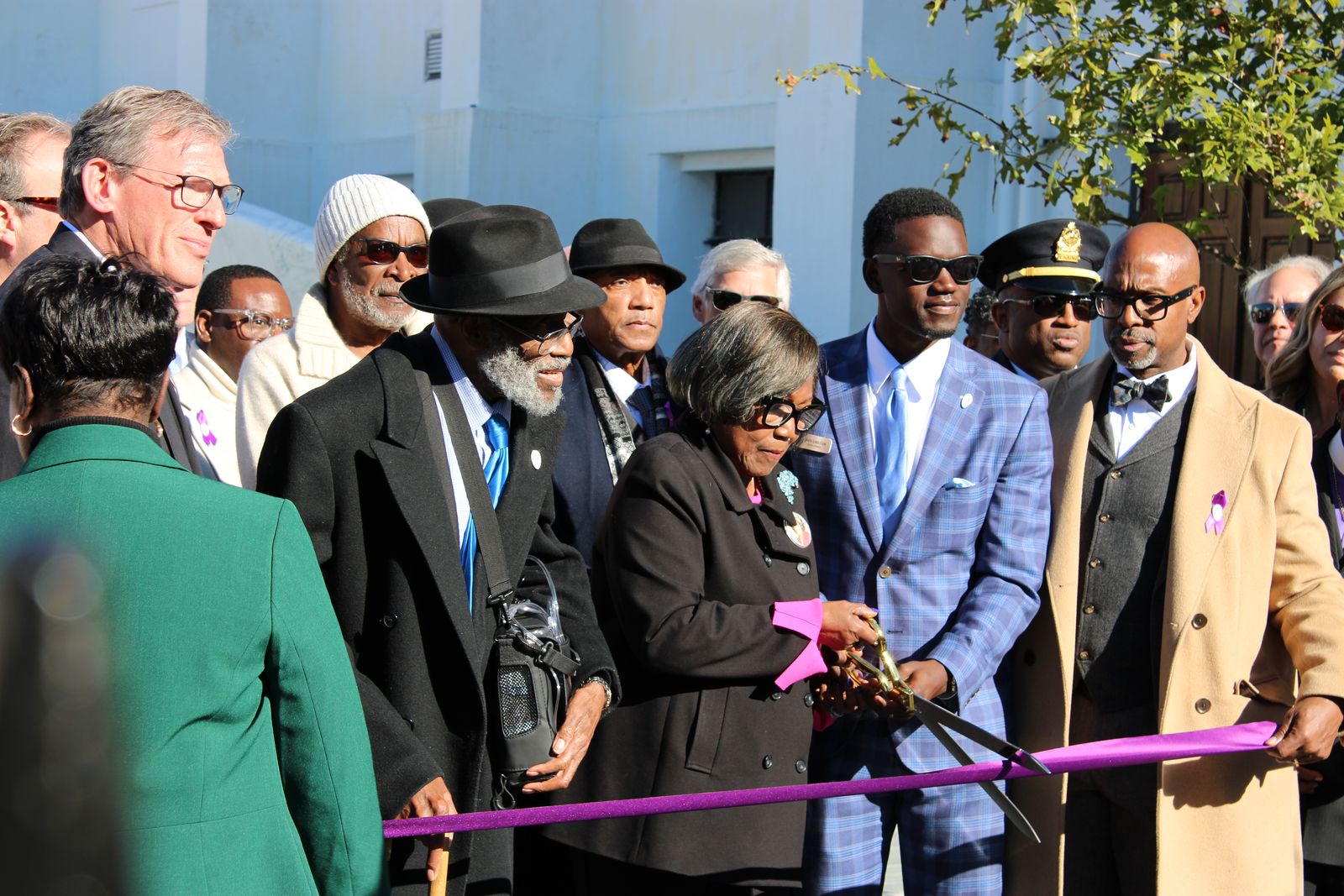
The opening ceremony brought together victims’ families, survivors, community leaders and residents for a ribbon-cutting ceremony, gospel and jazz performances, poetry and tributes to those whose lives were lost.
“This day represents more than a decade of determination, perseverance and unwavering commitment from the families, survivors, Mother Emanuel congregation and the Charleston community,” said Deona Smith, executive director of the Mother Emanuel Memorial Foundation.
“There have been challenges along the way, but we never lost sight of why this Memorial matters. So many people have given their time, resources and hearts to make this day possible.”
The memorial honors Rev. Clementa C. Pinckney; Cynthia Graham Hurd; Rev. Sharonda Coleman-Singleton; Tywanza Sanders; Ethel Lee Lance; Susie Jackson; Rev. DePayne Middleton-Doctor; Rev. Daniel L. Simmons, Sr.; and Myra Quarles Thompson.
The nine were participating in a Wednesday evening Bible study when a White supremacist opened fire inside the historic Black church. The attack shocked the nation and renewed conversations about racism, gun violence and the enduring legacy of racial hatred in America.
For the families, the memorial represents more than the tragedy itself. It offers an opportunity to preserve the identities, accomplishments and contributions of those who were killed.
“For our families, this Memorial is deeply personal. It’s not just about remembering what happened on June 17, 2015. It’s about remembering who our loved ones were, how they lived and the love they shared with the world,” said Chris Singleton, whose mother, Rev. Sharonda Coleman-Singleton, was among the victims.
“My mother was so much more than what happened to her that day. She was a woman of faith, a teacher, a coach and a mother who loved her family and her community.”
Designed by architect Michael Arad, who also designed the National September 11 Memorial in New York City, the Emanuel Nine Memorial incorporates several features intended to encourage contemplation and healing.
The site includes the Cross of Hope, a Memorial Courtyard featuring the Fountain of Grace, and Fellowship Benches where visitors can gather or reflect quietly.
A Survivors’ Garden, planned for a future phase, will honor the five people who survived the shooting and complete the redesigned grounds connecting the memorial with Mother Emanuel AME Church.
The project also recognizes the historic importance of Mother Emanuel, one of the nation’s oldest African American congregations and a long standing symbol of Black religious life, community leadership and the struggle for civil rights.
Established in 2017, the Mother Emanuel Memorial Foundation has raised $25 million, meeting its initial fundraising goal. Additional contributions will support completion of the Survivors’ Garden, educational initiatives and long-term maintenance of the memorial.
Beyond preserving the memory of the victims, the foundation plans to address racism and hatred through its Crossroads Education and Outreach program. The initiative will provide opportunities for dialogue, community engagement and education aimed at promoting understanding across racial and cultural differences.
Foundation leaders envision the memorial as both a tribute to those who died and a place where future generations can examine the consequences of hatred and the importance of compassion.
The memorial is free and open to the public at 120 Calhoun Street in Charleston. Regular visiting hours are Monday through Saturday from 9 am to 5 pm, and Sunday from noon to 5 pm. Paid guided tours are also planned to provide visitors with additional historical context.
For families and survivors, the opening fulfills a promise that the nine victims would be remembered not solely for the violence that ended their lives, but for the faith, service and love that defined them.
More information is available at <emanuelnine.org>.