Black unemployment rises to 12.1 percent

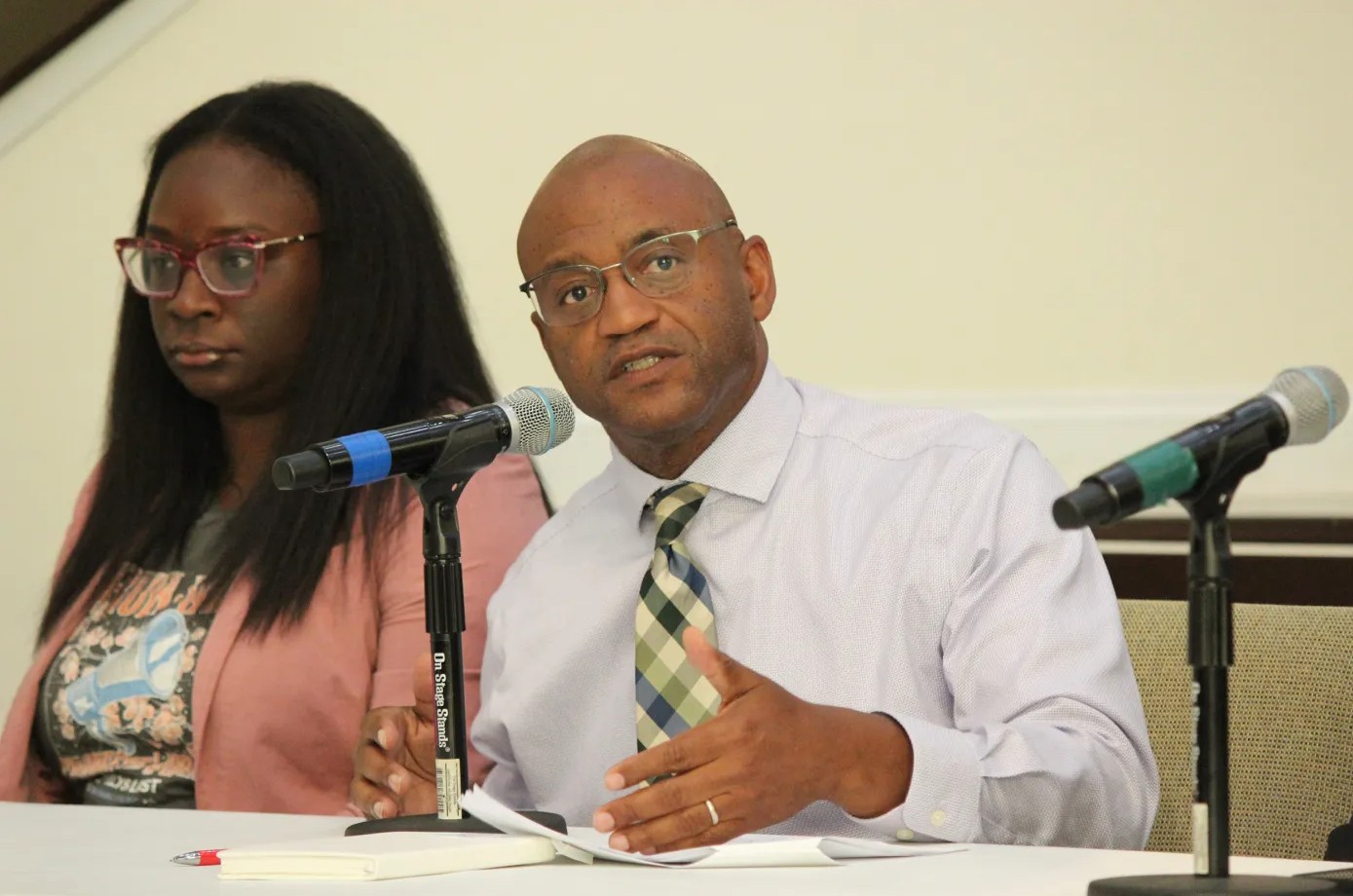
Rep. John Conyers wants emphasis on job creation  (NNPA Photo by Freddie Allen)
Rep. John Conyers wants emphasis on job creation
(NNPA Photo by Freddie Allen)

WASHINGTON (NNPA) – The Black unemployment rate increased from 11.9 percent in December to 12.1 percent in January, according the Department of Labor’s latest monthly report.

At 12.1 percent the Black unemployment rate is nearly double the national unemployment rate of 6.6 percent. The unemployment rate for Black men over 20 years old jumped from 11.5 percent in December 2013 to 12 percent in January, compared to White men who experienced a decrease in their unemployment rate from 5.6 percent in December 2013 to 5.4 percent in January.

The jobless rate for Black women over 20 years old didn’t change from December to January, staying flat at 10.4 percent, compared to White women who saw their unemployment rate tick down from 5.3 percent in December to 5.2 percent in January.

Young Blacks, 16-19 years-old, continue to suffer the highest rate of unemployment among all worker groups at 38 percent. The jobless rate for Whites in the same age group is 17.5 percent. Many economists believe that lack of job experience during their teenage years, hinders Blacks from learning crucial job skills at a young age, stunting any future job prospects.

The labor force participation rate, the number of people who are either employed or looking for work, rose for all adult worker groups. In a statement on the jobs report, U.S. ­­­­­­­­­­­­­­­­­­­­­­­­­Secretary of Labor Thomas E. Perez noted the increase in the labor force participation rate and the slowly shrinking unemployment rate as signs of economic progress in the flailing economy.

That progress has not trickled down to the Black community, where the jobless rate for Blacks is nearly twice the national average. The labor force participation rate also increased among Blacks, which may indicate that more Blacks were looking for jobs in January, but hadn’t found one.

Last Thursday, Republican senators buried a deal that would have extended unemployment benefits for 1.7 million Americans. Perez said that Congress remains a roadblock to progress.
On a post on the Center for Budget and Policy Priorities website Chad Stone, the center’s chief economist, wrote that, “Families rely on unemployment benefits to meet basic needs like food, health care, and housing while they look for work.”

Stone continued: “If Congress doesn’t restart the [long-term unemployment benefits], the number of affected workers will continue to climb each week, reaching 4.9 million by the end of the year.”

Stone wrote that jobless benefits go to people that spend the money quickly which has a positive effect on the overall economy.

“In fact, without the consumer spending that those benefits generated, the Great Recession would have been even deeper and the recovery even slower,” wrote Stone.
In an effort to find ways to spur job growth, last week, the Congressional Black Caucus announced plans to create a “Full Employment Caucus.” The caucus will “host expert economists and policymakers to discuss proven job-creation proposals and implement strategies for their adoption.”

In a statement on the creation of the caucus penned by Reps. John Conyers (D-Mich.) and Frederica Wilson (D-Fla.), the CBC members implored lawmakers to make job creation a top priority.

Ron Busby, president of US Black Chambers, Inc., shares historical prospective of black business achievement in an NNPA Op-Ed. “Among the goals of the USBC, entrepreneur development is the lofiest and most elusive,” he shares. “But we believe if we are successful at reigniting our passion for business ownership, we have the best opportunity to solve the challenges faced by Black America. The historical record of our ability to build colleges, insurance companies and hospitals proves that when necessary we can achieve monumental ‘wins’ through collective entrepreneurial activity. And, in today’s terminology — joint ventures, mergers and acquisitions provide the context for our next collective steps in business growth.

“… Business ownership opens doors of opportunity, not just for you and your family, but the families of your employees, associates, customers/clients, vendors and suppliers,” writes Busby.

According to a report by the Macroeconomic Advisers, an independent economic research, partisan gridlock and budget cuts have stripped $700 billion from the economy and slashed 2 million jobs from the labor force.

“Achieving full employment isn’t only about helping jobless people. When we return to full employment, investors and business people have more customers. When we return to full employment, workers have power to bargain for higher wages,” the statement said.

The CBC statement continued: “Finally, when we return to full employment, crime declines as desperate people gain a paycheck and a purpose.”

Fisk town hall highlights deep divide over proposed data center

Fisk University’s proposed Innovation Center is sparking debate in North Nashville as supporters cite student success and financial stability while critics raise concerns.

Rosetta Miller-Perry, pioneering publisher, dies at 91

Rosetta Miller-Perry, founder of the Tennessee Tribune and a pioneering voice in the Black press, died at 91 after a life of journalism, advocacy, and

New Tennessee laws now in effect
Here’s what changed on July 1

New Tennessee laws took effect July 1, bringing changes to immigration enforcement, education, criminal justice, public safety, healthcare, and consumer protections.

Former Titans star Chris Johnson reveals ALS diagnosis

Former Titans star Chris Johnson reveals his ALS diagnosis and hopes his story raises awareness, encourages earlier diagnosis, and supports research.

Black women’s deaths are exposing crisis we can’t ignore

Black women’s deaths are exposing a crisis of Black femicide, domestic violence, and public health inequity that can no longer be ignored.