With early voting beginning Oct. 14 for Tennessee’s Nov. 3 election, civil rights leaders are urging Tennesseans not only to cast their ballots but to remain engaged in decisions affecting their communities long after Election Day.
Voting rights, redistricting and political participation were among the major issues discussed during the Tennessee State Conference NAACP’s recent 80th annual State Convention and Civil Rights Training Conference.

Gloria Sweet-Love, president of the Tennessee State Conference of the NAACP, said encouraging voters to participate early is one of the organization’s priorities. Tennessee’s voter registration deadline was Oct. 5. Early voting runs Oct. 14-29.
“One of the things that we’re going to be doing for sure is we’re going to be encouraging people to ‘early vote,’” Sweet-Love said. “Because if you early vote, you get away from some of that voting day drama that they have.”
The conference also included training for poll watchers and information about resources available to voters who encounter problems at polling locations.
But speakers emphasized that civic participation should extend beyond simply casting a ballot.
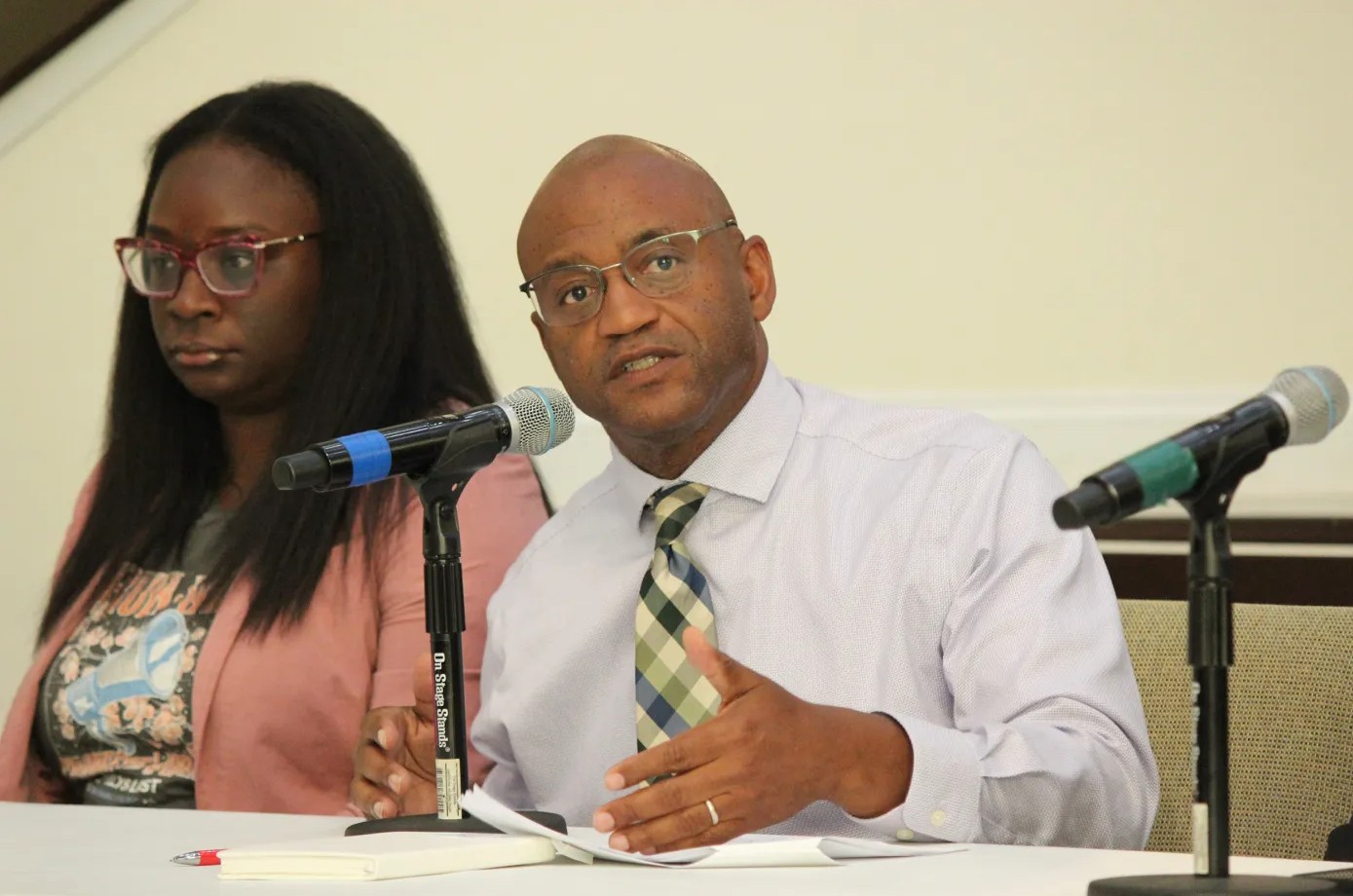
Dr. Sekou Franklin, executive director of the John Lewis Center for Social Justice at Nashville’s Fisk University, placed current voting-rights debates in the context of changes taking place in election law and congressional redistricting.
Franklin pointed to the U.S. Supreme Court’s April ruling in ‘Louisiana v. Callais’ while discussing the legal landscape surrounding voting rights and the drawing of majority-Black congressional districts. The Supreme Court ruled April 29 that the Voting Rights Act did not require Louisiana to create an additional majority-minority congressional district and held that the map at issue was an unconstitutional racial gerrymander.
The discussion also addressed Tennessee redistricting, voter frustration and ways to encourage younger people to become more involved in civic life.
Franklin said participation can take many forms.
“Everyone has a role to play in this democratic experiment,” Franklin said. “It’s just that we have to be creative enough to create those roles that people play.”
Other speakers echoed that message, encouraging people to know their voting status and districts, bring others to the polls and remain involved in local government after elections are over.
Venita Doggett, executive director of the Memphis Interfaith Coalition for Action and Hope, said organizers also must confront the frustration of voters who have been told their vote is their power but do not always see results they believe reflect that power.
“If what I get in return does not match what power looks like, then I tap out,” Doggett said.
She said organizations must move beyond simply telling people to vote and find ways to reach them where they are, including churches, neighborhoods and community events. Her organization has used door-to-door outreach, voter hubs at congregations, handwritten postcards, text banking and other strategies.
“I remind people that you have power beyond the ballot,” Doggett said.
Dominik Whitehead, the NAACP’s chief of field, membership growth and unit sustainability, said engaging younger voters requires listening to how they describe the issues affecting them.
“I’m not fighting for democracy,” Whitehead recalled hearing from younger people. “I’m fighting for our rights.”
Young people also have an important role in connecting traditional civil rights organizing with social media and modern communication, panelists said.
“There is no way possible we’re going to win this fight without young people,” Whitehead said.
Sweet-Love similarly stressed the stakes of participation heading into November.
“Everybody always says this is the most important election of your life,” she said. “But for sure in America, this is because if we don’t get out and vote, we might not have a democracy left to vote in.”
With registration now closed for the Nov. 3 election, attention turns to early voting beginning Wednesday, Oct. 14. Civil rights leaders say the message for voters is straightforward: know what is on the ballot, vote, bring others with you and stay engaged after the election.
(Portions of this story were reported by Lee Eric Smith of the Tri-State Defender and Danielle Smith of Tennessee News Service.)