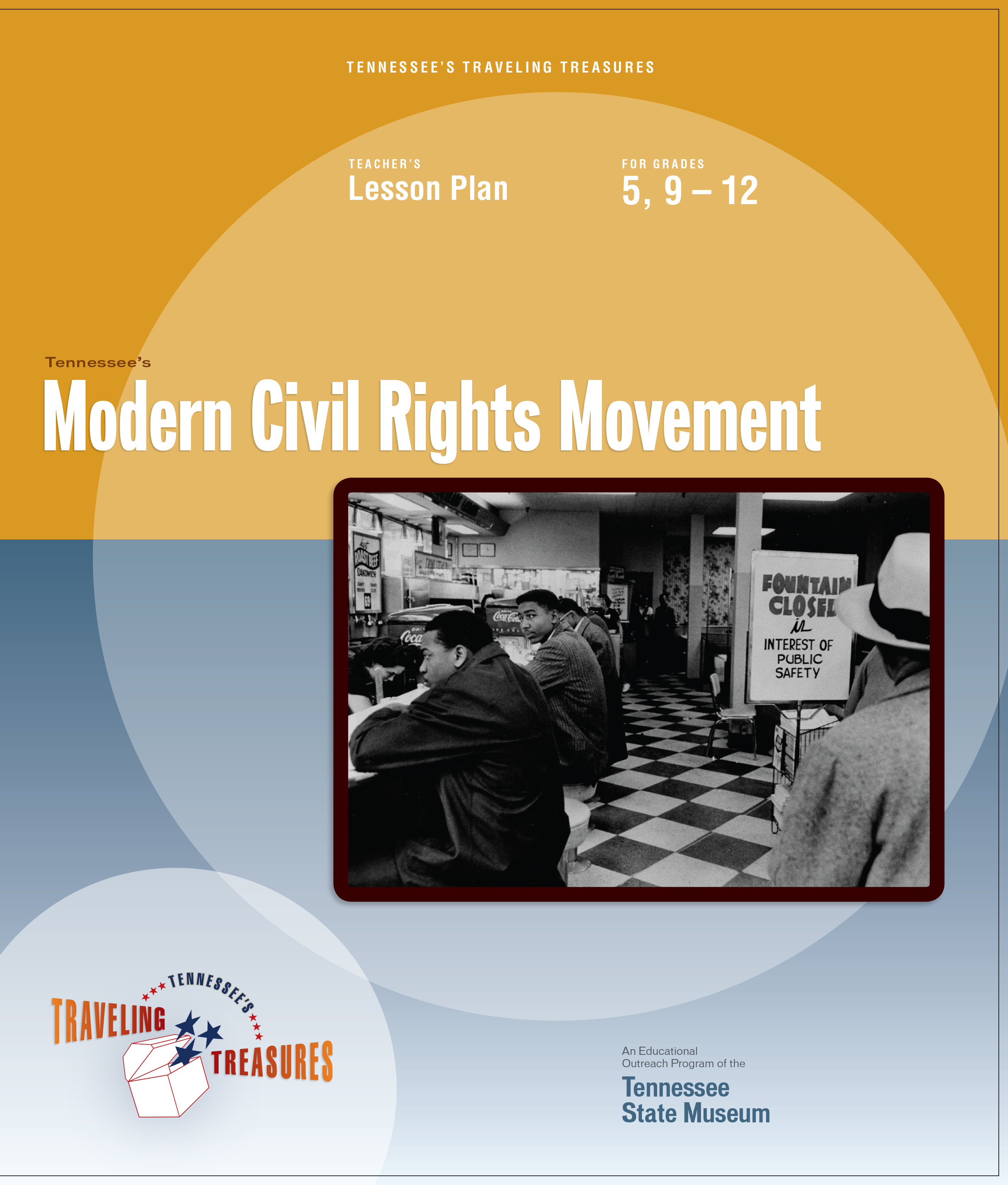
Tennessee was at the forefront of the Civil Rights movement, and between 1945 and 1975, no event was more dramatic. The first public school to be integrated in the South was in Clinton, Tennessee. Blacks in Fayette and Haywood counties lived in tents to try and force county officials to allow them to vote. In Nashville, students at predominantly black universities led the way in non-violent protest with a sit-in of Nashville lunch counters, before moving on to Freedom Rides and voter registration drives in Alabama and Mississippi.
Significant artifacts related to these and other events and the people connected to them are part of the Tennessee State Museum’s collection, including the Lorraine Motel in Memphis, which is part of the National Civil Rights Museum and leased long-term to the Lorraine Motel Civil Rights Museum Foundation. The Museum’s permanent exhibit, when it moves to its new location at the corner of Rosa L. Parks Boulevard, and Jefferson Street in the fall, will include many of these items and their stories. The Museum also has a popular Traveling Trunk titled “The Modern Movement for Civil Rights in Tennessee.” Filled with real and reproduction artifacts, portraits, paintings, books, music CDs, DVDs, and more, Traveling Trunks allow teachers to tap new and creative ways to experience social studies in their classroom. The Civil Rights trunk travels the state and is currently booked through the middle of May. Through accompanying lesson plans, teachers throughout the state of Tennessee are also directed to the Museum’s tn4me.org educators’ site, which has extensive information and links to resources about Civil Rights.
Two years ago, in partnership with TPAC, Tennessee State Museum opened an exhibit titled “I Have a Voice: Tennessee African American Musical Heritage,” that included the significant role that music played in the Civil Rights movement. The exhibit is now traveling and recently opened at the West Tennessee Delta Heritage Museum in Brownsville.
The Tennessee State Museum is free and open to the public six days a week. For information about exhibits, visit tnmuseum.org. Visit the Museum’s educational website at TN4me.org to learn more about our state’s history.