

Nationwide, 100 million people have criminal records and six million are disenfranchised by state laws.
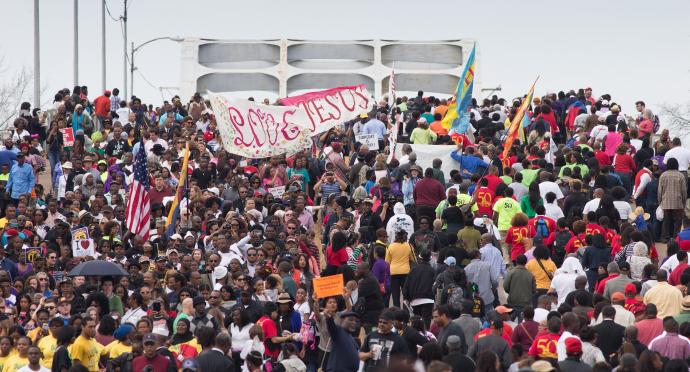
Thousands of people will gather in Selma this weekend, March 1-4, to commemorate the 53rd anniversary of ‘Bloody Sunday’ when state troopers violently attacked peaceful voting rights demonstrators crossing the Edmund Pettus Bridge as they marched to Montgomery.
Martin Luther King, Jr. was arrested and imprisoned at the Dallas County Jail in Selma. Fifty years later, Rev. Kenneth Glasgow of nearby Dothan, Ala., will be at the jail registering people to vote who are awaiting trial and can’t afford to bail out. Nationally, a growing population of 700,000 people are in jail awaiting trial.
Glasgow and other civil rights leaders and supporters will announce the launch of a southern initiative to register hundreds of thousands of formerly and currently incarcerated people. In Alabama alone, more than 200,000 people with criminal convictions have recently had their voting rights restored due to relentless work of Glasgow and his organization. The Ordinary People Society (TOPS) during the last 15 years.
“If people are treated like citizens, they’ll begin acting like citizens,” said Glasgow who served 14 years in prison himself and struggled to regain his voting rights through a complicated legal process that took three years.
TOPS felon voting rights work involved challenging the state’s 1901 White supremacist ‘moral turpitude’ law designed to disenfranchise African Americans. That work included passing legislation in 2017 that finally defined the crimes of ‘moral turpitude’ and re-enfranchised most of the 286,000 people with felonies in the state.
People with criminal records are an emerging voting block that premiered in the Special U.S. Senate election in Alabama in December when Black voter turnout surged and defeated openly racist and misogynist cand-idate Roy Moore by 21,311 votes.
Just a few weeks before the election, TOPS deployed its grassroots team of ministers and formerly incarcerated people to help register and turn out 8,221 criminal justice system-impacted voters—including many voting absentee from inside prisons and jails across the state.