MEMPHIS, Tenn. — A federal judge has rejected an attempt by the U.S. Department of Justice to dismiss a lawsuit filed by the NAACP against Elon Musk’s artificial intelligence company, xAI, allowing a legal challenge over alleged air pollution violations affecting Memphis and North Mississippi communities to move forward.
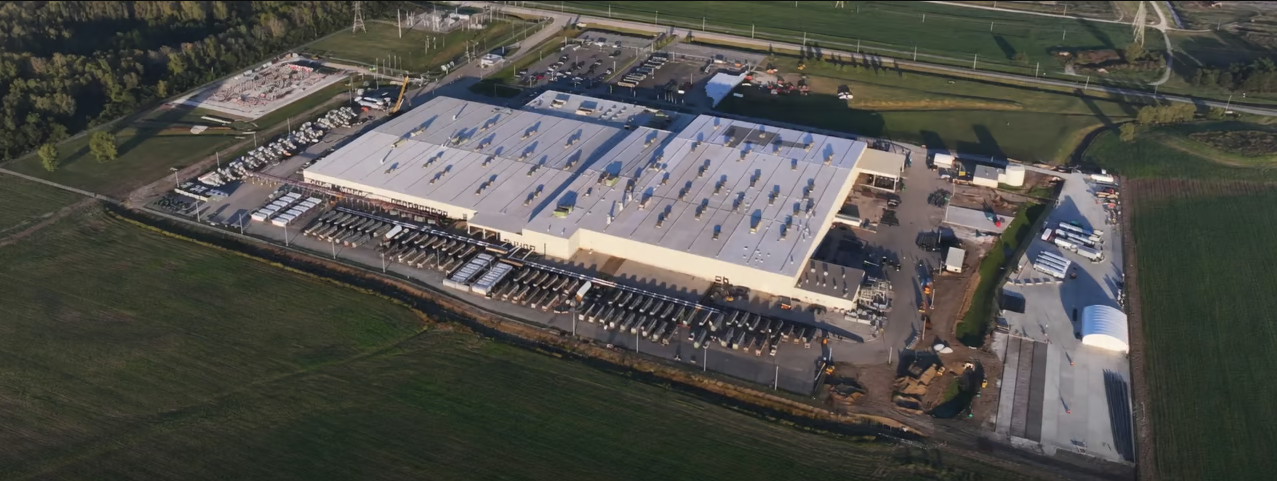
The lawsuit centers on a gas-fired power facility supporting xAI’s Colossus 2 data center in North Mississippi, just across the Tennessee state line. Environmental advocates contend that pollution from the facility threatens air quality and public health throughout the greater Memphis region.
The U.S. District Court for the Northern District of Mississippi ruled that the Justice Department does not have the authority to unilaterally dismiss a citizen lawsuit brought under the federal Clean Air Act.
The NAACP, represented by the Southern Environmental Law Center and Earthjustice, alleges that xAI has operated the facility without required air permits, potentially exposing nearby communities to harmful pollutants.
In its ruling, the court stated that there is “no ‘fairly possible’ interpretation of the Clean Air Act that would give the United States the right to unilaterally dismiss a citizen suit.”
Although the court permitted the Justice Department to intervene, it emphasized that intervention does not automatically give the federal government authority to terminate the case.

The decision followed a separate ruling by the Fifth Circuit Court of Appeals denying the Justice Department’s request to temporarily halt the proceedings.
According to the NAACP and its environmental partners, the facility has the capacity to emit more than 5,000 tons of nitrogen oxides annually, along with more than 400 tons of fine particulate matter and 47 tons of formaldehyde. The figures represent potential emissions rather than verified annual releases.
These pollutants have been linked to respiratory illnesses, asthma, cardiovascular disease and other health problems. Because air pollution crosses state boundaries, advocates argue that emissions from North Mississippi could also affect Memphis neighborhoods.
Abre’ Conner, the NAACP’s director of environmental and climate justice, welcomed the ruling.
“Our case has always been about holding polluters accountable and making sure that entities follow the law,” Conner said. “The court made clear today that the law applies to everyone, including the federal government.”
Patrick Anderson, senior attorney with the Southern Environmental Law Center, called the decision an important step toward protecting residents.
“This is a major step toward protecting communities in North Mississippi and Memphis from xAI’s unlawful pollution, and we look forward to continuing to fight in court,” Anderson said.
The dispute comes as Memphis and surrounding communities experience growing investment in artificial intelligence infrastructure. While large data centers can generate economic activity, their substantial electricity demands have raised concerns about energy consumption, industrial emissions and environmental oversight.
For Memphis residents, particularly those in neighborhoods already affected by industrial pollution, the lawsuit highlights ongoing questions about balancing economic development with public health protections.
The ruling does not determine whether xAI violated the Clean Air Act. Instead, it allows the NAACP’s allegations to proceed through the federal court system, where the evidence and legal arguments will be examined.
xAI’s Colossus AI data center cluster straddles the Memphis, Tennessee–-Southaven, Mississippi border, using cross-state infrastructure to power and cool its massive super-computing operations.