
(Family Features) For many people, the heart naturally contracts and relaxes to a regular beat. However, those living with atrial fibrillation (AFib) experience a quivering or irregular heartbeat that can lead to further health issues including stroke, heart attack, heart failure or sudden cardiac arrest.
In fact, people with AFib are up to five times more likely to have a stroke, yet many people are unaware that AFib is a serious condition. Managing your AFib is important to reducing your stroke risk.

Consider this important information from the American Heart Association’s Getting to the Heart of Stroke, an initiative sponsored nationally by the HCA Healthcare Foundation, to understand if you may be at higher risk of a stroke.
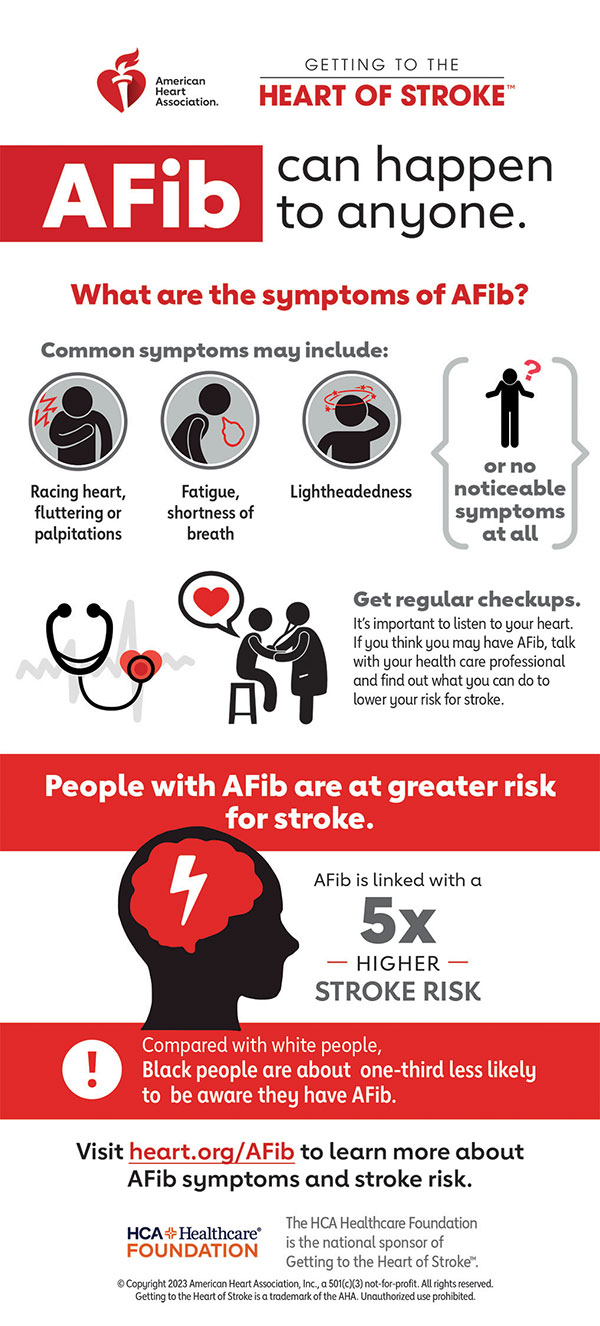 Symptoms
While some people with AFib don’t have symptoms, those who do may experience a racing heartbeat or irregular heart rate. Other common symptoms include heart palpitations (rapid “flopping” or “fluttering” feeling in the chest); lightheadedness or faintness; chest pain or pressure; shortness of breath, especially when lying down; or fatigue.
During AFib, some blood may not be pumped efficiently from the atria (the heart’s two small upper chambers) into the ventricles. Blood that’s left behind can pool in the atria and form blood clots. The clot may block blood flow to the brain, causing a stroke.
Risk Factors
Anyone can develop AFib. The risk factors for AFib are broken into two categories: heart-health factors and behavioral factors. Heart-health factors may include advancing age (especially over age 65), family history of AFib, high blood pressure, prior heart attack or disease, diabetes, sleep apnea and prior heart surgery. Behaviors that may be associated with higher risk factors include excessive alcohol use, smoking and prolonged athletic conditioning. (Appropriate physical activity is important for a healthy lifestyle, but you should discuss your exercise plan with a health care professional.)
“Early identification and treatment of AFib is critical to stroke prevention, especially in high-risk populations experiencing health care disparities or barriers to accessing vital health care resources,” said Steven Manoukian, MD, FAHA, senior vice president at HCA Healthcare. “Common risk factors, like high blood pressure, are more prevalent within Black communities, yet Black patients may be diagnosed less often with AFib. Creating awareness of AFib, stroke risk and treatment options can be a lifesaving first step in stroke prevention.”
Treatment Options
It’s important to talk to your doctor if you think you may have symptoms of AFib or be at risk for AFib. Diagnosis of AFib starts with an in-depth examination from a doctor. Work with your doctor to identify a treatment plan and goals to help manage your AFib and reduce your risk of stroke.
Treatment options for AFib may include medications to prevent and treat blood clots or control heart rate and rhythm, procedures or surgery. Your doctor may also prescribe medications to prevent and treat blood clots that can lead to a stroke. Discuss the best options for you with your doctor to create a shared decision-making plan.
To learn how to manage your AFib and connect with others, visit MyAFibExperience.org.
Photo courtesy of Getty Images (doctor and patient)
SOURCE:
American Heart Association