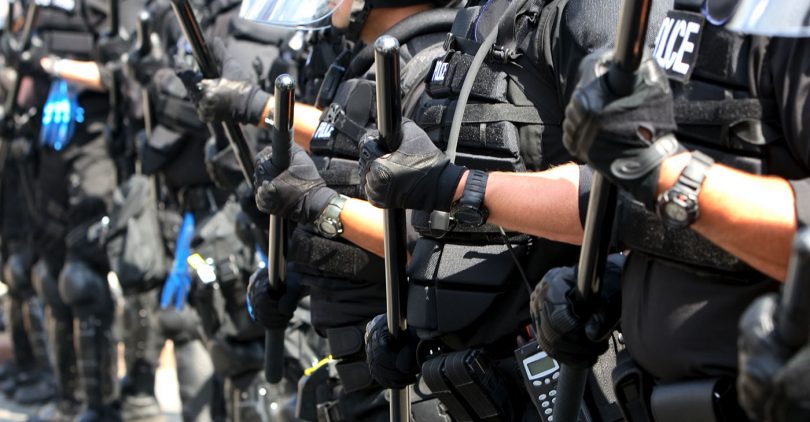
A comprehensive national study has brought to light distressing connections between officer-involved killings of unarmed Black individuals and adverse sleep outcomes within the African American community. The research was published in the journal JAMA Internal Medicine and utilized a nationally representative repeated cross-sectional design. It delved into the repercussions of structural racism on sleep health outcomes following incidents of police violence.
The central inquiry of the study focused on whether officer-involved killings of unarmed Black individuals are associated with adverse sleep health outcomes in the community. Utilizing a difference-in-differences design, researchers examined changes in sleep duration among non-Hispanic Black individuals before and after exposure to such incidents.

“There are lots of reasons why Black Americans’ sleep, at least in terms of duration as well as quality, is worse than for potentially other groups,” said lead study author and associate professor of medical ethics and health policy at the University of Pennsylvania, Dr. Atheendar Venkataramani. “Part of it has to do with some economic factors, the types of jobs people are in, the environments people are living in, with regards to the noise or crime or things that are around, and the experience of discrimination can also create stress, which is bad for sleep.”
Data from the U.S. Behavioral Risk Factor Surveillance Survey (BRFSS) and the American Time Use Survey (ATUS) were analyzed, covering 2013, 2014, 2016, and 2018 for BRFSS and 2013-2019 for ATUS. The study included responses from 181,865 Black and 1,799,757 White participants in the BRFSS and 9,858 Black and 46,532 White participants in the ATUS.
The findings revealed a stark reality: non-Hispanic Black individuals were more likely than their non-Hispanic White counterparts to report short sleep (less than seven hours) or very short sleep (less than six hours) following an officer-involved killing of an unarmed Black person in their area of residence. The trend persisted after nationally prominent incidents, irrespective of location within the United States.
The study suggests a concerning association between exposure to officer-involved killings and racial disparities in sleep health. It further posits that these sleep disparities may play a mediating role in broader health outcomes linked to structural racism.
The study underscored the pervasive impact of structural racism on racial disparities in sleep health outcomes. The implications for public health are significant, with study authors emphasizing the need for a deeper understanding of the systemic issues contributing to these outcomes and the development of targeted interventions to address the root causes.
Medical professionals have urged policy makers, healthcare professionals, and communities to collaborate in addressing the underlying issues to foster a society where everyone can enjoy equal access to health and well-being.