


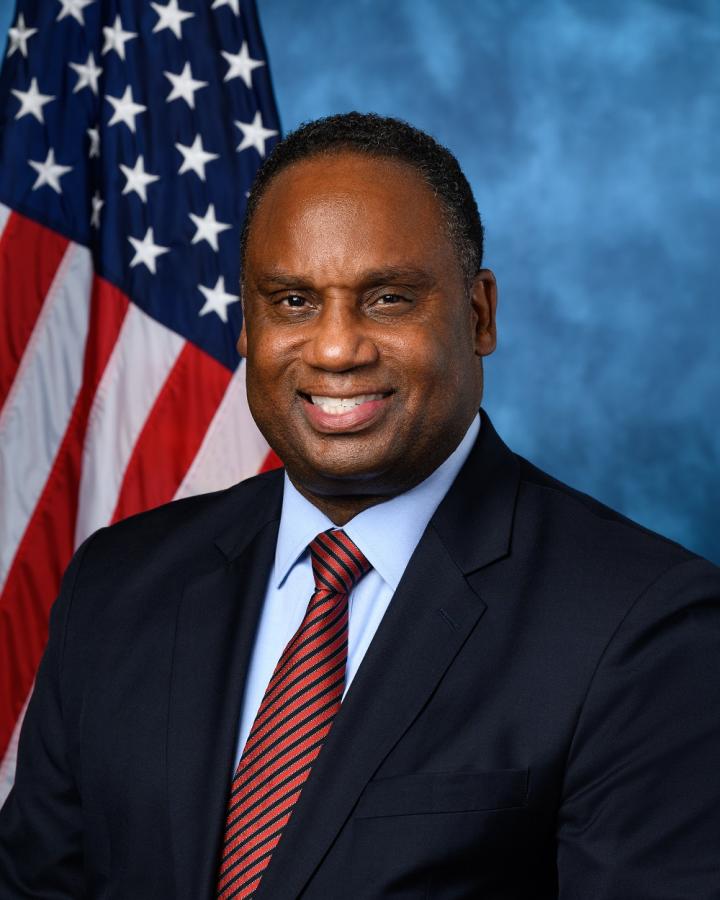
by U.S. Rep. Jonathan Jackson
<TriceEdneyWire.com> — In a country where wealth disparities persist, financial inclusion is still the road that leads to equity. Black Americans have historically faced barriers to wealth generation and investment opportunities. Today, the tide is turning, and technology is paving the road to education, access, and empowerment.

A myriad of new technologies continue to create more opportunities for our historically underserved communities to participate in the financial system, including in the areas of banking and investing.
What is ‘financial inclusion’?
At its core, financial inclusion is a term of hope. It aims to ensure all individuals and communities, regardless of socio-economic background, have equitable access to affordable and reliable financial services to manage their finances, invest, save, and build wealth.
For Black Americans, it represents a pathway to rectifying historical injustices and systemic barriers that have hindered economic progress for centuries. Financial inclusion is a prime facilitator of poverty reduction and a generator of financial stability for Black families to accumulate assets and create pathways to mobility.
Access to modern technology is not universal, and the digital divide is a crucial example of how much we still need to achieve. But for many Black people throughout the country, technology provides an unprecedented opportunity to participate in the financial market. Here’s how:
Access to information: The internet provides a wealth of knowledge previously kept from marginalized groups at a lower cost only technology can produce. Now, those groups can educate themselves about personal finance, investment strategies, and wealth-building.
Mobile apps: Apps have transformed the way we connect with businesses and one another. Intuitive interfaces, quicker response times, and overall enhanced user experience make apps a powerful tool for us to do business.
Financial literacy: Educational resources are available to empower individuals to make informed financial decisions, whether through e-newsletters, podcasts, webinars, or online courses.
Digital banking: Online banking allows for more convenient and cost-effective money management. No longer tied to physical branches, underserved communities can transact, save, and invest from anywhere.
Fintech: With the convergence of finance and technology, Fintech is leveraging digital platforms to create innovative solutions to democratize financial services. Companies like Robinhood have enabled a new wave of investors to participate in the stock market without costly trading commissions and high account minimums.
According to the Ariel-Schwab Black Investor Survey conducted in 2022, trust in technology surpasses trust in people when it comes to managing assets. Young Black investors are leading the charge, with three times as many investing in the stock market for the first time in 2020, compared to their White counterparts. Additionally, 29% of Black investors under 40 were new to investing in 2020, compared to 16% of White investors.
Federal Reserve data reinforces this trend. In 2022, 58% of American households owned stocks. Notably, Black and Hispanic investors increased their participation significantly, both almost doubling since 2019.
The Black community stands at the forefront of this era, where under-resourced communities embrace their newfound access to the financial landscape. But despite increasing literacy and inclusion and the combined efforts of our political leaders, including the Congressional Black Caucus and the Financial Services Committee, and recent legislation like the ‘Financial Innovation and Technology for the 21st Century Act’ (FIT21), history has taught us that our continued progress isn’t guaranteed. Some federal regulators, like Securities and Exchange Commission’s Gary Gensler, have pursued new regulations that would undermine important efforts to narrow the racial wealth gap and increase financial inclusion for the Black community.
As we look ahead, the support of young and new voices in Congress who champion pro-innovation policies is exactly what we need to sustain momentum. Despite the setbacks, recent progress is encouraging, but there is so much more that can be done to increase participation. Harnessing the power of technology and advocating for financial inclusion can pave the way for a more equitable future where every Black American is ensured the tools needed to thrive and prosper.
(Rep. Jonathan Jackson (D-Ill.), representing Illinois’ First Congressional District, is a lifelong activist committed to social justice and equity for marginalized groups.)