
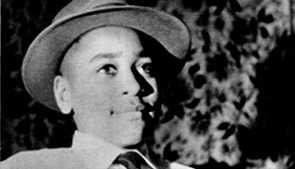
Newly unearthed research notes and letters from William Bradford Huie, the journalist whose reporting on the 1955 lynching of Emmett Till helped shape the public’s understanding of the crime, reveal that Huie deliberately concealed vital details that could have implicated additional participants in the murder. These documents, recently released by the descendants of one of the lawyers involved in the case, suggest that Huie prioritized his financial interests and the protection of his sources over the pursuit of truth and justice.
The cache of documents, now housed in the Florida State University Digital Repository, includes a 33-page set of Huie’s research notes and a series of letters exchanged between Huie and John Whitten, one of the defense attorneys for J.W. Milam and Roy Bryant, the two men acquitted of Till’s murder. The content of these letters and notes reveals a complex and troubling relationship between the journalist and the defense team, raising serious questions about the integrity of Huie’s reporting.

Huie’s notes indicate that he was aware of other individuals involved in the kidnapping and murder of Emmett Till but chose not to report this information. In a letter dated December 10, 1955, Huie confessed his doubts about the story Milam and Bryant were telling him: “I began doubting myself, and one night I was on the point of coming back to Mississippi and ‘pistol-whipping’ Milam for telling me a fabric of lies.” Despite these doubts, Huie went ahead with his article in Look magazine, presenting Milam and Bryant’s version of events as the complete truth.

The letters between Huie and Whitten also reveal the extent to which Huie was willing to collaborate with the defense attorneys to craft a narrative that would serve their mutual interests. In a letter dated November 16, 1955, Huie assured Whitten that he was carefully considering the “most effective presentation” of the story, saying: “We have been sort of marking time in due time and with great care, I’ll be in touch with you.” This close coordination suggests that Huie’s reporting was influenced not only by his desire to protect his sources but also by a shared goal of controlling how the public would receive the story.
Huie’s financial motivations are laid bare in another letter from Whitten, dated November 22, 1955, in which the attorney thanked Huie for a gift—a fine Cavanaugh hat—and expressed confidence that the criminal case would not proceed further despite any additional publicity. “My wife was so complimentary of the hat that I finally had to tell her something about where it came from,” Whitten wrote. “Nevertheless, I think that we should not throw caution to the winds.”
Beyond these troubling collaborations, Huie’s notes reveal that he was aware of a “third man” involved in the kidnapping of Emmett Till, identified by Elizabeth Wright, Till’s great-aunt, as Milam’s brother-in-law from Minter City, Melvin Campbell. However, this information was not included in Huie’s published article, which instead presented a version of events that Huie himself doubted.
The letters also highlight Huie’s strategic manipulation of the narrative to ensure the story’s maximum impact. In a December 20, 1955, letter, Huie boasted to Whitten about his ability to control the story, writing: “I dealt with a magazine with which I could exercise this control. You see, John, I’m very old in this propaganda business. I know how to fight smart, so smart that my ‘enemies’ don’t realize just what is being done to them at times.”
Huie’s cynical approach extended to his portrayal of Till, as revealed in the same letter, where he explained that including a detail about Till having a picture of a White girl in his wallet would “pinpoint the hypocrisy” of White liberals and make them “very uncomfortable.” These remarks starkly contrast Huie’s public reputation as a journalist sympathetic to the Civil Rights Movement.
Huie’s reporting had an immediate and profound impact when it was published. His article in Look magazine led to a backlash against Milam and Bryant, even among White Mississippians who had previously supported them. U.S. Rep. Charles Diggs (D-Mich.) read the story into the congressional record, and it was hailed as “spectacular” by Black newspapers. However, Huie’s decision to omit critical details effectively ended efforts by Black journalists and the FBI to pursue additional suspects in the case.
The release of these documents exposes the uncomfortable truth that Huie’s reporting, while instrumental in bringing the horror of Emmett Till’s murder to national attention, was deeply compromised. The documents suggest that his decisions to prioritize financial gain and protect his sources over full transparency contributed to a narrative that left justice incomplete and the full story untold.