Richard Dean Parsons, a distinguished leader in corporate America renowned for his roles at Time Warner and Citigroup, died Thursday at his Manhattan home. He was 76.
Parsons, who was diagnosed with multiple myeloma in 2015, had scaled back his professional commitments in recent years due to complications from the disease. Lazard, the financial services firm where Parsons was a longtime board member, confirmed his death.
Ronald Lauder, chairman emeritus of Estée Lauder, called Parsons “a colossus in the worlds of business, media, culture, and philanthropy.” Parsons resigned from the boards of Lazard and Estée Lauder earlier this month for health reasons, ending a 25-year tenure with the latter company.
David Zaslav, CEO of Warner Bros. Discovery, described Parsons as a “great mentor and friend” and credited him as “one of the greatest problem solvers this industry has ever seen.”
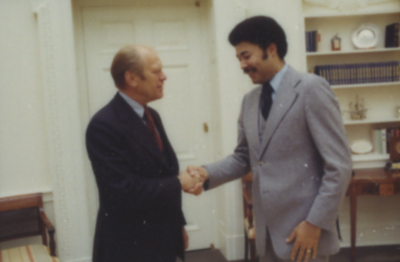
Born on April 4, 1948, in Brooklyn, New York, Parsons exhibited academic excellence from a young age, beginning college at just 16. He earned his law degree from Albany Law School in 1971. His career began as a lawyer and counselor to then-New York Gov. Nelson Rockefeller and later included a role in the White House during the Ford administration.
Parsons transitioned to the private sector as managing partner at Patterson, Belknap, Webb & Tyler and later served as chief operating officer of Dime Bancorp. In 1995, he became president of Time Warner, overseeing its entertainment and corporate operations. He ascended to CEO in 2002, where he worked to strengthen the company’s financial position and reshape its portfolio. Most recognized Parson as one of America’s top executives.
Parsons played a critical role during challenging periods at both Time Warner and Citigroup. He became Citigroup chairman in 2009 amid significant losses and public scrutiny of its practices. Under his leadership, the company returned to profitability and restored stability, retiring from the role in 2012.
In 2014, Parsons stepped in as interim CEO of the Los Angeles Clippers during a contentious moment for the team until its sale to Steve Ballmer. NBA Commissioner Adam Silver described him as a “brilliant and transformational leader.”
Beyond his corporate contributions, Parsons’ passion for jazz led him to co-own a Harlem jazz club and take on leadership roles at the Apollo Theater and the Jazz Foundation of America. He also served on the Smithsonian National Museum of African American History and Culture boards, the Museum of Modern Art, and the American Museum of Natural History.
Parsons’ commitment to education and philanthropy was evident through his support of Howard University, where he was a trustee emeritus and co-chairmanship of New York City’s Commission on Economic Opportunity.
He is survived by his wife, Laura, and their family.