

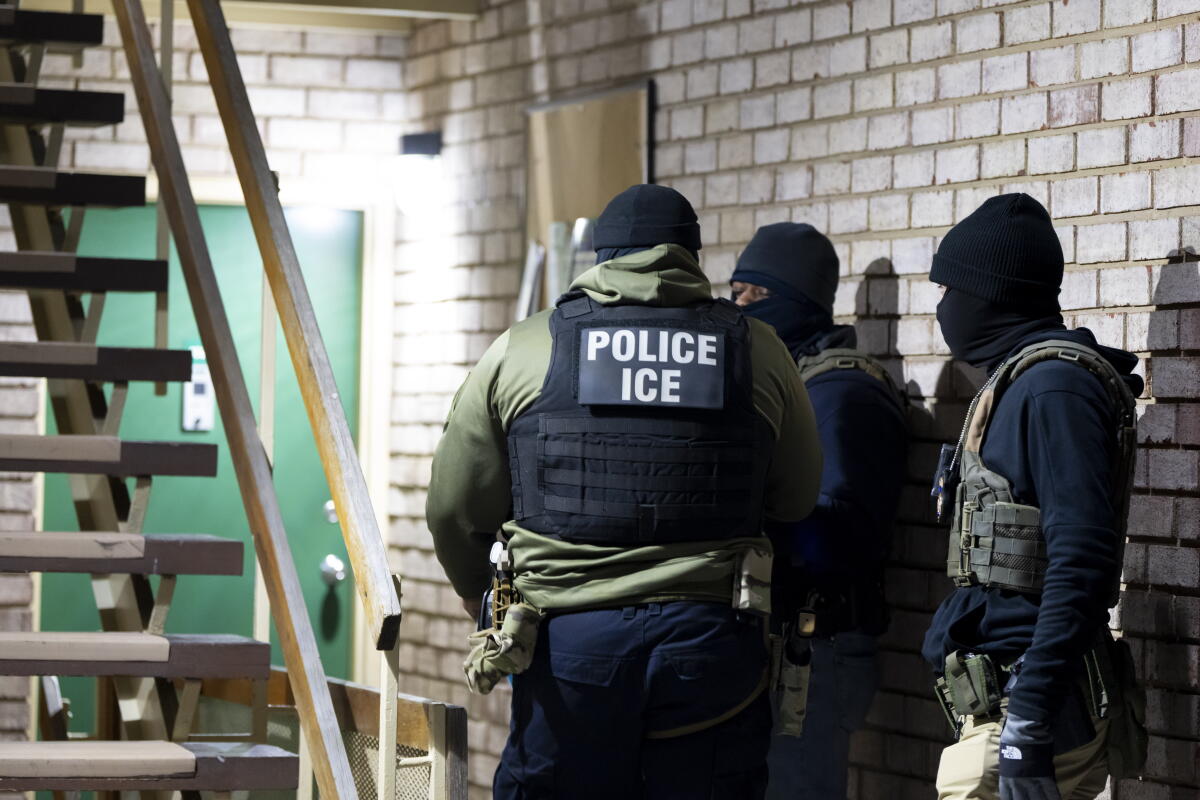
WASHINGTON, D.C. — The NAACP, National Urban League and seven other civil rights, immigrant and labor organizations have filed a federal lawsuit seeking to prevent the Trump administration from deploying ICE and other federal law enforcement officers at or near polling places during the November midterm elections.
The lawsuit alleges that statements and actions by federal officials have created fear among some voters (particularly Black, Latino, Asian American and Pacific Islander voters, immigrants, naturalized citizens and people in mixed-status families) that they could encounter federal agents when they go to vote.
The organizations argue that the threatened presence of armed federal officers could discourage eligible voters from casting ballots and amounts to voter intimidation prohibited by the Voting Rights Act.
The administration has defended its broader election-related efforts as necessary to protect election integrity and prevent illegal voting. The lawsuit challenges the legality of using federal law enforcement at or around voting locations and asks the court to prohibit such activity.
The case comes as concerns over the federal government’s role in the 2026 elections have intensified ahead of Election Day.
Nine organizations joined the lawsuit: the NAACP, National Urban League, Mi Familia en Acción, OCA–Asian Pacific American Advocates, Minnesota 8, Service Employees International Union, American Federation of Teachers, International Union of Painters and United Food and Commercial Workers International.
They are represented by a coalition of voting- and civil-rights organizations, including the Legal Defense Fund, Asian American Legal Defense and Education Fund, Brennan Center for Justice at NYU Law, LatinoJustice PRLDEF, National Immigration Law Center, Protect Democracy and Democracy Defenders Fund.
The complaint alleges that federal officials have asserted authority for armed agents to operate near voting locations while removing or weakening internal safeguards intended to prevent federal interference in elections.
The plaintiffs contend that those actions could leave voters fearful of questioning, surveillance, detention or arrest when casting ballots, registering voters or working as election officials.
Section 11(b) of the Voting Rights Act prohibits intimidation, threats or coercion against people who are voting or attempting to vote, as well as those assisting others in exercising their voting rights.
Kristen Clarke, general counsel for the NAACP, said the organization believes the threatened presence of federal agents could discourage people from voting.
“The Voting Rights Act prohibits intimidation tactics that stand to deny and deter voters from exercising their voice and their rights,” Clarke said.
National Urban League President/CEO Marc H. Morial said Black Americans have a particular historical connection to the issue because intimidation was long used to prevent them from voting.
“Black Americans know the painful history of efforts to intimidate voters and deny equal access to the ballot,” Morial said. “We will not allow those tactics to be repackaged for a new era.”
Janai Nelson, president and director-counsel of the Legal Defense Fund, said voters should be able to cast their ballots without fear.
“All American voters have the sacred right to have a voice in our democracy,” Nelson said, “and should be able to exercise that right freely and without fear.”
The lawsuit comes amid a wider national dispute over the federal government’s role in election administration and enforcement.
President Donald Trump has previously raised the possibility of using federal resources to protect what he describes as election integrity. His administration has also pursued efforts aimed at noncitizen voting and election procedures.
However, Gen. Dan Caine, chairman of the Joint Chiefs of Staff, said in August that the military had no plans to deploy federal troops or National Guard personnel to polling places for the November elections and that state and local officials are responsible for election administration and security.
The civil rights organizations contend that assurances regarding military forces do not resolve their concerns about ICE or other federal law enforcement agencies.
They are asking the federal court to prohibit what they describe as threatened federal law-enforcement activity at or around polling places.
With the November midterms approaching, the case could help determine the boundaries of federal law-enforcement activity around voting sites and whether the administration’s statements and actions violate federal protections against voter intimidation.