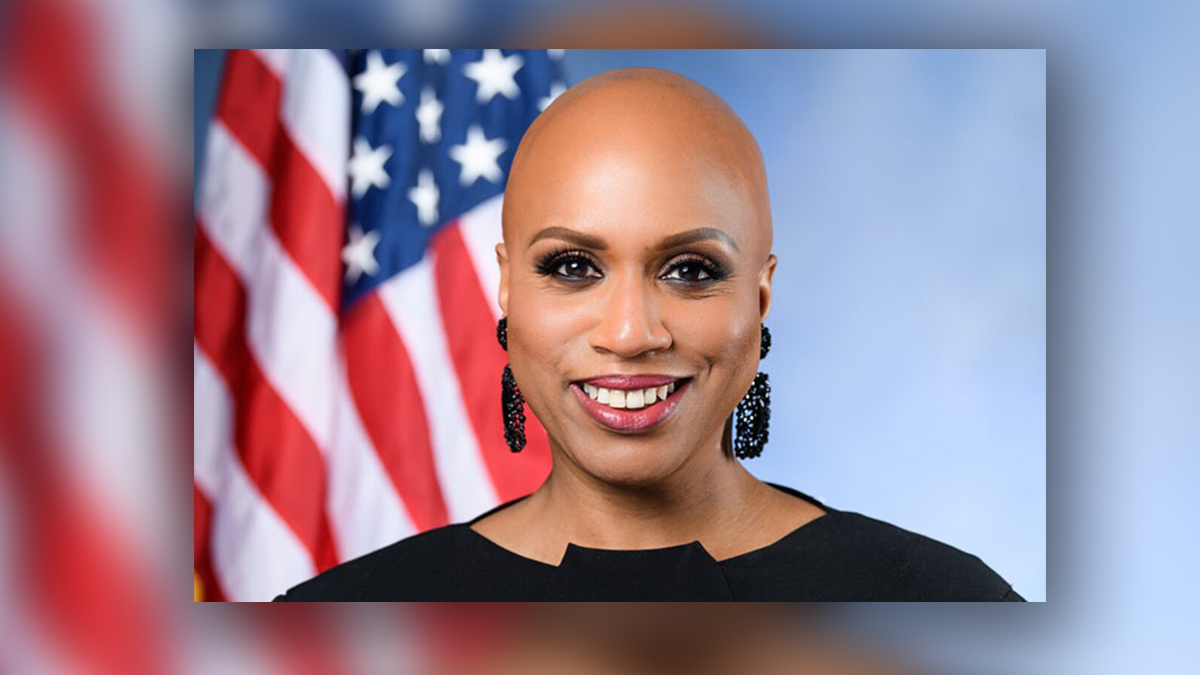
Four of state Sen. Charlane Oliver’s Nashville constituents have filed a federal lawsuit against Tennessee Senate Speaker Randy McNally and other Senate officials, alleging that Oliver was illegally punished for protesting a congressional redistricting plan that divided predominantly Black Memphis among three districts.
The lawsuit, filed Monday in U.S. District Court for the Middle District of Tennessee, names Oliver and constituents Rev. Dr. Judy Cummings, Shani Glapion, Quiteka Moten and Joshua Wesley as plaintiffs. McNally, Senate Chief Clerk Russell Humphrey and Legislative Administration Director Krista Lee Carsner are named as defendants.

At the center of the case is a dramatic confrontation during a May special session of the General Assembly. Oliver, a Nashville Democrat representing Senate District 19, spoke against a new congressional map that split the former Memphis-centered 9th Congressional District among three districts.
According to the complaint, the former district had a Black voting-age population of 61.1%. Under the new map, Black residents account for 28%, 27% and 32% of the voting-age populations in the three districts containing portions of the former district.
During debate, Oliver continued speaking after her microphone was turned off, stood on her Senate desk, displayed a banner reading ‘No Jim Crow 2.0’ and ‘Stop the TN Steal,’ and sang ‘Lift Every Voice and Sing.’
The lawsuit alleges Senate officials then refused to record Oliver’s vote against the redistricting legislation. The official tally was announced as 25-5, without Oliver’s vote.
Later that month, McNally imposed additional restrictions on Oliver, including limiting when she could receive legislative per diem payments, ending reimbursement for travel to out-of-state legislative conferences and moving her from the Government Operations Committee to the State and Local Government Committee.
Oliver and her constituents argue those actions amounted to retaliation for constitutionally protected political speech and impaired her ability to represent more than 200,000 constituents. The suit raises claims under the First and Fourteenth Amendments as well as the Tennessee Constitution.
“When I stood on my Senate desk, I did it because the legislature swiftly moved to silence the voices of Black Tennesseans,” Oliver said in announcing the lawsuit. “As the only Black senator representing Nashville, I carry the voices of people who have been pushed to the margins of this state’s policies for generations.”
McNally’s office has previously defended the disciplinary actions. In an August statement cited in the complaint, his office described Oliver’s protest as “an embarrassing and performative display” and called the punishments “measured, appropriate, and entirely legal.” McNally’s office also disputed the claim that Oliver was prevented from voting, saying the voting board had already been closed.
The lawsuit challenges that account. It alleges Oliver twice attempted to cast a ‘no’ vote electronically while standing on her desk but discovered that her voting button was not recording her vote. The complaint also alleges other Democratic senators had their votes recorded despite not being at their desks.
The plaintiffs contend that under the Tennessee Constitution, authority to punish a senator for disorderly behavior belongs to the Senate as a whole rather than the speaker or chief clerk acting individually. That is an allegation the court will have to resolve.
The suit asks the court to order the Senate Journal changed to record Oliver’s vote against the redistricting bill, rescind the punishments, restore withheld per diem and travel reimbursements and prevent additional punishment stemming from her conduct during the special session. Oliver also seeks compensatory and punitive damages.
Oliver is represented by the Institute for Constitutional Advocacy and Protection at Georgetown University Law Center, Campaign Legal Center Action and Nashville law firm Barrett Johnston Martin & Garrison. The case was filed Sept. 28.