A new Vanderbilt University poll shows growing concern over the economy and cost of living is weighing heavily on Tennesseans, driving pessimism about the nation’s direction and contributing to declining approval ratings for President Donald Trump.
The survey, conducted by Vanderbilt University’s Center for the Study of Democratic Institutions, found that economic stress cuts across political parties, income levels and geographic regions throughout the state.
According to the poll, 88% of Tennesseans now describe the cost of living as expensive, including 50% who say it is “very expensive.” Nearly half of respondents also expressed anxiety about their ability to afford necessities such as food, housing and transportation.
The survey questioned 1,203 registered Tennessee voters between April 13 and April 29 and carried a margin of error of plus or minus 3.2 percentage points. Poll topics included the economy, elected officials, international affairs and the growing use of artificial intelligence in healthcare.
The findings show Tennesseans are significantly more pessimistic about the direction of the country than the state itself. While voters were nearly split on Tennessee’s future (50% say the state is headed in the right direction and 49% say it is on the wrong track), 58% said the United States overall is headed in the wrong direction.
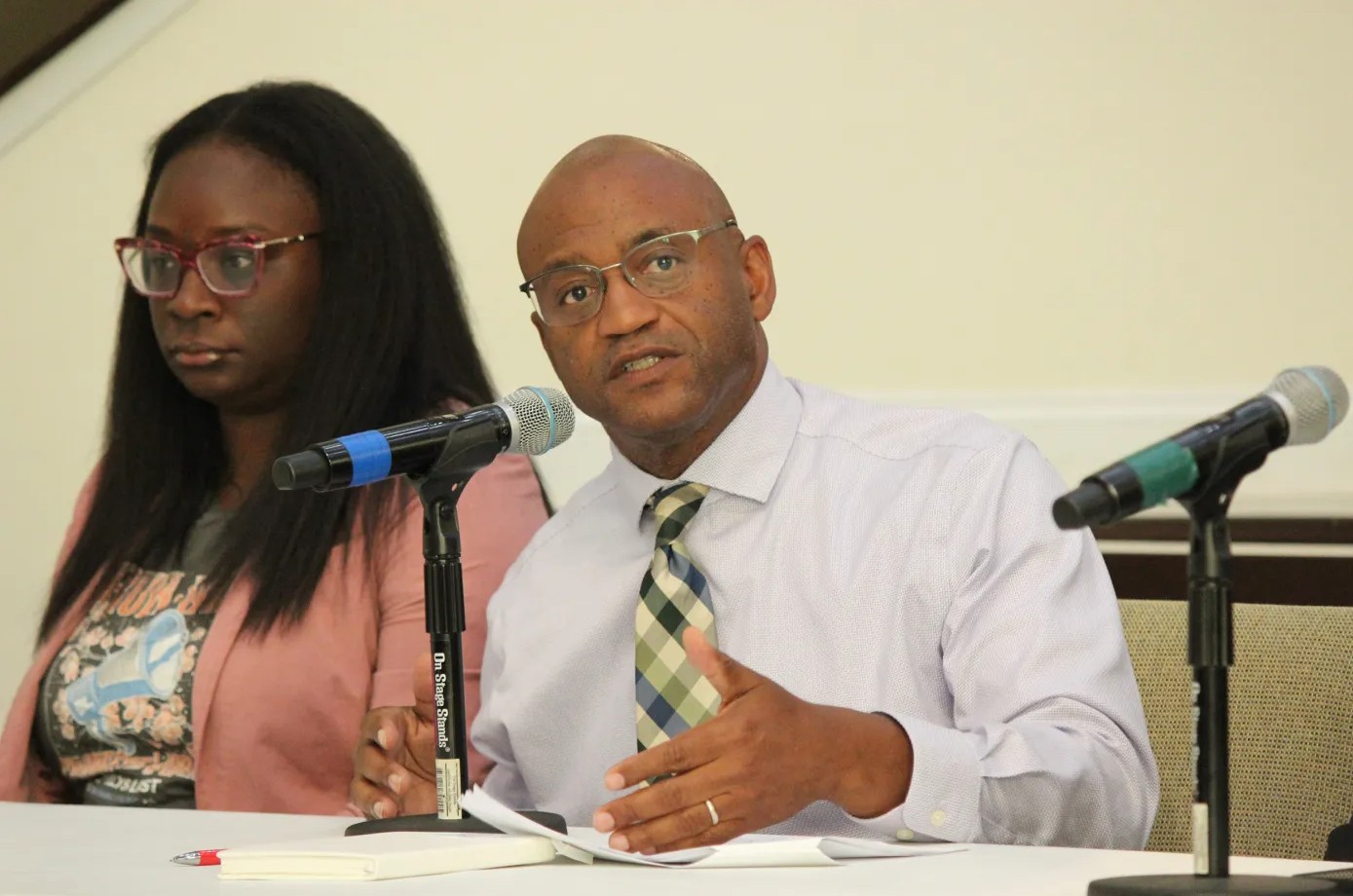
“Economic stress is hitting home for Tennesseans, and that strain is evident in the growing bipartisan despondency reflected in the poll numbers,” said Josh Clinton, co-director of the Vanderbilt Poll.
Another co-director of the poll, John Geer, said the results reflect a disconnect between broader economic statistics and the financial reality many residents feel in their daily lives.
“Unemployment and inflation rates might look good on paper, but voters are reeling from sticker shock at the grocery store and bracing for what’s next in uncertain international and domestic times,” Geer said.
The economic concerns appear to be influencing political opinions as well.
Trump’s approval rating among Tennessee voters dropped to 49%, down seven points from the November 2025 Vanderbilt Poll. While support among self-identified MAGA voters remained extremely high at 94%, the poll found a decline in support among independent voters, where approval dropped from 46% a year ago to 36% now.
Meanwhile, approval ratings for Tennessee Republican leaders remained relatively steady. Gov. Bill Lee received 56% approval, while U.S. Sens. Marsha Blackburn and Bill Hagerty each registered 51% approval.
The poll also found strong bipartisan agreement that the federal government should focus more on domestic issues rather than international conflicts. Seventy-eight percent of respondents said the country should prioritize problems at home, including strong majorities among independents and conservative voters.
“Voters are united on many fronts, including their desire for a shift in national focus,” Clinton said. “They want leaders to fix what’s broken at home versus engaging in conflict abroad.”
In healthcare, Tennesseans expressed significant caution about the growing role of artificial intelligence. While many respondents acknowledged AI could improve efficiency and reduce errors, most remained uncomfortable with AI replacing doctors or independently creating treatment plans.
Nearly 70% said they were uncomfortable with AI evaluating symptoms and developing treatment recommendations without physician involvement. Many also cited concerns over data privacy and maintaining personal interaction with healthcare providers.
At the same time, 54% said AI could help make some healthcare processes more efficient, highlighting a complicated and evolving public attitude toward emerging technology in medicine.