NASHVILLE, Tenn. — As summer gets underway, Tennessee State University is welcoming hundreds of students to campus through a diverse lineup of summer camps designed to provide academic enrichment, athletic training, creative arts experiences and early exposure to college life.
With more than 14 programs offered throughout the summer, TSU’s camps serve students ranging from elementary school children to high school seniors. The programs cover a broad spectrum of interests, including engineering, transportation, music, athletics, leadership development and historically Black college and university culture.

University officials say the camps are about more than simply keeping students occupied during summer break. They are designed to inspire curiosity, build confidence and help young people envision themselves pursuing higher education and future careers.
One of the university’s premier academic offerings is the National Summer Transportation Institute (NSTI), a four-week residential program hosted by TSU’s College of Engineering and supported by the Tennessee Department of Transportation and the Federal Highway Administration. The program introduces high school students to careers in transportation, engineering and STEM fields through hands-on projects, industry exposure and leadership development activities.
College of Engineering Dean Lin Li said the institute gives students an opportunity to explore fields they may not otherwise encounter.
“The NSTI program aims to introduce STEM to high school students and foster their interest in science, engineering and mathematics,” Li said. “It enhances understanding of transportation challenges, exposes students to career opportunities and develops problem-solving and leadership skills.”
Li noted that the program combines faculty expertise, laboratory experiences and industry partnerships to create a meaningful educational experience. Interest remains strong, with this year’s cohort of 20 students already at capacity.
Athletics also play a major role in TSU’s summer programming. Among the most popular offerings are the university’s free volleyball camps led by TSU Head Volleyball Coach Donika Sutton. The camps are designed to introduce young athletes to the sport while helping more experienced players refine their skills.
“It’s very important for us to reach and connect with the youth in the community, but it’s also our job to introduce them to organized sports and the sport of volleyball,” Sutton said.
The volleyball program includes a variety of options tailored to different ages and skill levels. Younger participants can take part in the Cubs Camp, which focuses on fundamentals, games and fun, while older athletes can attend skills clinics and elite camps that mirror the pace and intensity of collegiate training sessions.
“We’re starting with our Cubs Camp for ages 6 to 11,” Sutton said. “That’s basic skills, games and fun, just introducing them to the sport. Then we move into our skills clinic for ages 11 to 18, and our elite camp, which is much more fast-paced and runs close to a college practice setting with a lot of competition and repetition.”
Sutton said making the camps free was a deliberate effort to ensure that cost would not prevent students from participating.
“We don’t want financial barriers to stop anyone from experiencing camp,” she said. “We’re pretty much at capacity for all volleyball camps.”
Students interested in music and the performing arts also have opportunities to learn from some of the university’s most accomplished instructors through the Edward L. Graves Band Camp. The program features members and directors associated with TSU’s Grammy Award-winning Aristocrat of Bands and provides instruction in performance techniques, musicianship and ensemble development.
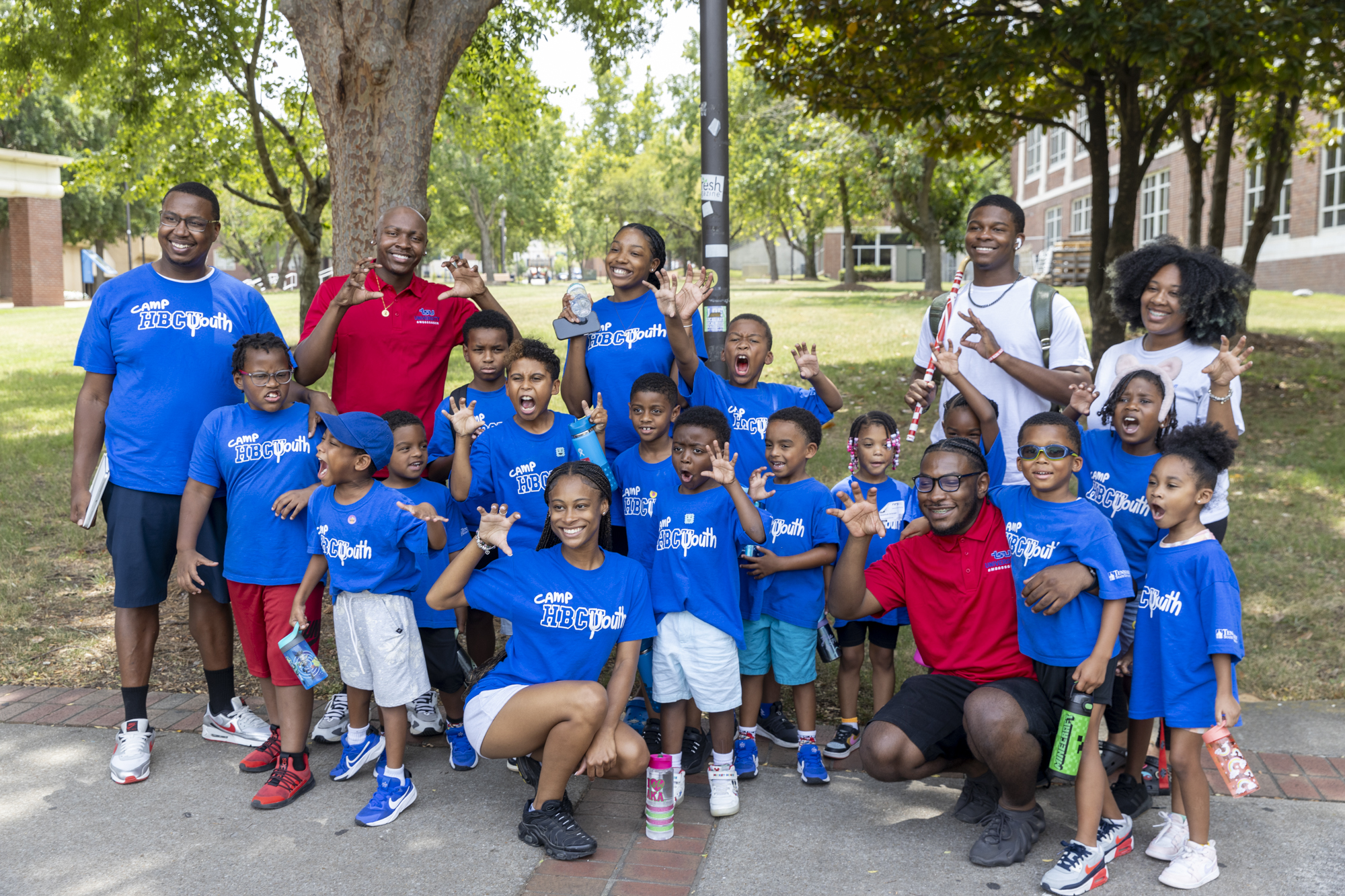
Another highly anticipated program is Camp HBCYouth, which introduces participants to the traditions, culture and educational opportunities associated with historically Black colleges and universities. Through academic workshops, mentorship and interactive activities, students gain firsthand experience with campus life while developing leadership skills and building relationships with peers.
The university is also hosting the Joe Gilliam Football Camp, a non-contact program for boys and girls ages 12 to 18 that focuses on athletic development, teamwork, character building and mentorship.
Leah Granderson, executive director of Planning, Design, Construction and Operations, said the wide range of camp offerings reflects TSU’s mission of serving both students and the broader community.
“These camps show the energy and reach of TSU across academics, athletics and the arts,” Granderson said. “It’s exciting to see young people on our campus learning, exploring and building confidence in different fields.”
Granderson noted that for many participants, the camps provide their first opportunity to spend meaningful time on a college campus.
“For many of these students, this may be their first time visiting a college campus, so we want it to be a memorable and positive experience that inspires them to see themselves in higher education,” she said.
She added that the success of the camps depends on collaboration across the university.
“From faculty to facilities, it truly takes a campus-wide effort,” Granderson said. “These programs reflect who we are and the impact we want to continue making in the community.”
As camps continue throughout June and July, university officials expect hundreds of students to participate in programs that combine education, recreation and personal development while keeping the TSU campus active throughout the summer months.