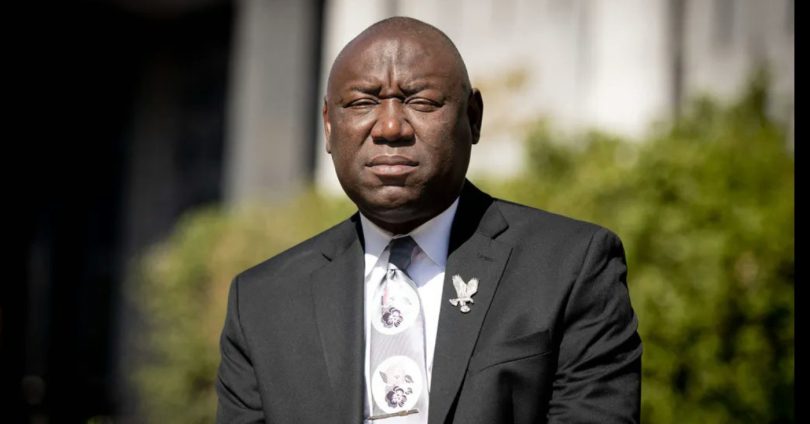
A federal lawsuit filed by prominent civil rights attorney Ben Crump alleges that two Black infants were used as subjects in a government-sponsored experimental vaccine study without their parents’ knowledge or consent, resulting in tragic consequences that continue to reverberate decades later.
The complaint, filed on May 22, centers on the deaths of Ross Otto Hambrick and Victor Marcellus King, who were allegedly administered an experimental respiratory syncytial virus (RSV) vaccine developed by the National Institutes of Health (NIH) during the mid-1960s.

According to the lawsuit, Ross was two months old and Victor was four months old when they were injected with a vaccine identified as “Lot 100” at a Washington, D.C. hospital in the winter of 1965. The suit contends that their parents were never informed of the experimental nature of the vaccine nor asked to provide consent.
RSV is a common and highly contagious respiratory virus that often causes mild cold-like symptoms in healthy adults. However, it can lead to severe illness and even death among infants, older adults, and other vulnerable populations.
The lawsuit alleges that both children became critically ill following exposure to the virus the following year. Victor died on January 1, 1967, at 16 months old, while Ross died the next day at 14 months old.
According to court filings, medical findings at the time suggested that the children’s deaths may have been linked not only to RSV infection but also to an enhanced immune response allegedly triggered by the experimental vaccine, compounded by bacterial pneumonia.
The complaint further claims that tissue samples collected during the infants’ autopsies were preserved and later used by researchers studying why the vaccine had produced such severe outcomes. Attorneys for the families argue that the scientific knowledge derived from those studies contributed to later advancements in RSV research, including vaccines and antibody therapies approved decades afterward.
The lawsuit alleges that the families were never informed of the role their children’s tissue samples played in subsequent research and were never compensated for their contribution to medical advancements.
Crump and his legal team have filed claims including wrongful death, lack of informed consent, and civil battery. Co-counsel William H. Murphy Jr. argued that federal researchers proceeded with testing despite concerns about earlier RSV vaccine trials and the potential risks posed to young children.
The complaint also references previous RSV vaccine studies conducted during the 1960s, alleging that researchers continued testing despite reports of severe illness among some participants.
“The families of Ross Otto and Victor have waited nearly sixty years for answers and accountability,” Crump said in a statement announcing the lawsuit.
The NIH has not publicly responded to the allegations contained in the complaint. As the case proceeds through the courts, the lawsuit is expected to renew debate over medical ethics, informed consent, and the historical treatment of minority communities in medical research.
The allegations also draw attention to broader discussions about past instances of unethical experimentation in the United States and the importance of maintaining strict safeguards for human subjects participating in medical studies.