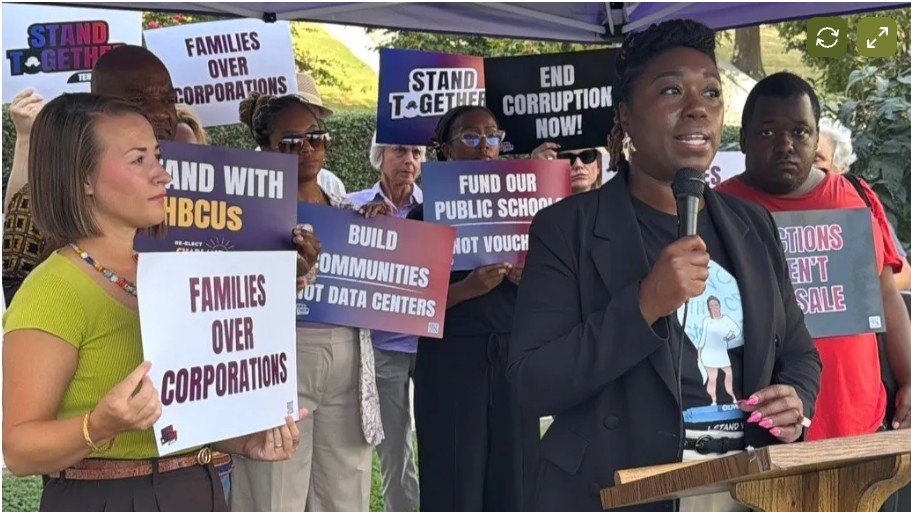
Metro Council Budget and Finance Committee Chair Kyonzté Toombs has filed her substitute budget ordinance for Fiscal Year 2027, advancing a spending plan that builds upon Mayor Freddie O’Connell’s proposed budget while incorporating recommendations from Council members, community organizations and residents who participated throughout the budget process.
The substitute budget comes after weeks of departmental reviews, committee discussions and public input sessions, including comments gathered during the Council’s pre-budget public comment period in February and testimony delivered during a nearly four-hour public hearing held June 2.
Toombs said the proposal reflects the priorities voiced by residents across Nashville and Davidson County and seeks to address some of the city’s most pressing challenges.
“This substitute budget reflects the priorities we heard directly from residents across Nashville and Davidson County,” said Toombs. “It makes meaningful investments in housing stability, community safety and services for our most vulnerable neighbors while remaining responsible stewards of taxpayer dollars. At its core, this budget is about improving quality of life and creating opportunities for every Nashvillian to thrive.”
The spending plan places a strong emphasis on housing affordability, homelessness services, public safety programs and support for nonprofit organizations that provide essential services to residents.
Among the largest allocations is an additional $2.1 million for Nashville’s Eviction Right to Counsel Program, which provides legal representation to eligible tenants facing eviction. Supporters of the program say access to legal counsel has helped many residents remain housed and avoid displacement during periods of financial hardship.
The substitute budget also proposes an additional $1.25 million for the Office of Homeless Services to support continued operations at the Rodeway Inn shelter program through the Hospitality Hub of Memphis. The funding is intended to help provide temporary housing and support services for individuals experiencing homelessness.
Housing initiatives receive another boost through a proposed $1 million increase to the Barnes Housing Trust Fund. If approved, the additional investment would bring total funding for the trust fund to $23 million, supporting affordable housing development and preservation efforts across the county.
Public safety and community-based intervention programs also receive attention in the substitute budget. The Nashville Fire Department would receive $401,500 to fund a second shift for its REACH program, which connects residents experiencing behavioral health crises, homelessness and other challenges with social services and community resources.
Economic opportunity initiatives are also included. The Urban League of Middle Tennessee would receive $250,000 to support workforce development programs aimed at helping residents gain job skills and secure employment opportunities.
Several nonprofit organizations are slated to receive targeted investments as well. The Pet Community Center would receive $60,000 to support spay and neuter services, while The Branch would receive $100,000 to help expand food access programs and English language classes for immigrant and refugee communities.
The substitute budget further includes $101,800 for General Sessions Court to fund a new social worker position. The role is expected to help connect individuals involved in the court system with support services and community resources that may reduce future involvement with the justice system.
According to Toombs, public feedback played a significant role in shaping the final proposal.
“The public made its priorities clear,” she said. “Residents spoke passionately about housing affordability, homelessness, neighborhood safety and economic opportunity. This substitute budget responds with targeted investments that strengthen communities and support residents at every stage of life.”
Toombs also expressed appreciation for the collaboration that occurred throughout the budget process, thanking Mayor Freddie O’Connell, Finance Director Jenneen Reed, Budget Officer Aaron Pratt, Vice Chair Jason Spain, fellow Council members and Council Office staff for their work in developing the spending plan.
The Metropolitan Council is scheduled to consider the FY2027 Substitute Budget during its June 16 meeting. If approved, the budget will guide Metro Nashville’s spending priorities for the fiscal year beginning July 1, 2026.
The budget debate comes as Nashville continues to grapple with rising housing costs, growing service demands and ongoing discussions about how best to invest public resources to support residents while maintaining fiscal responsibility. Council members are expected to discuss the proposed amendments and funding priorities before taking a final vote on the spending plan.