


The Toronto International Film Festival screened 293 films over 10 days in downtown Toronto, where the streets were packed with festival goers. Black features, documentaries and shorts were an integral part of the international lineup. Here are a few standouts—and a crowd-pleaser.
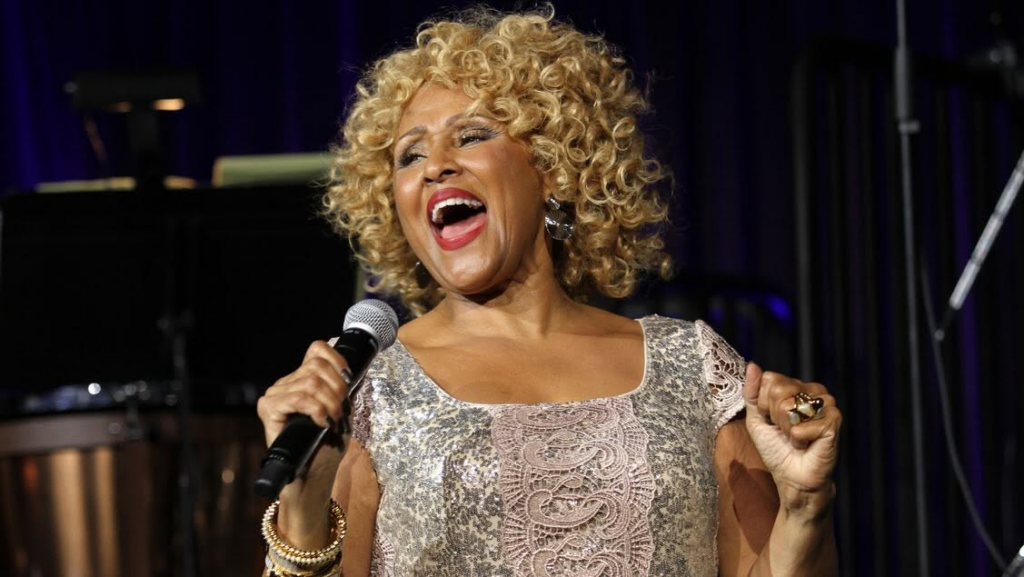
Darlene Love: I Know Where I’ve Been (*)
Winner: 2026 People’s Choice Documentary Award, presented by Rogers**
“One of the greatest voices in the history of rock ’n’ roll.” That’s what Bette Midler proclaimed when she inducted Darlene Love into the Rock & Roll Hall of Fame. Director Barry Avrich (Oscar Peterson: Black + White) makes that case.
At the film’s core is the effervescent and reflective Love, born Darlene Wright in 1941. She thoughtfully retraces her rise to stardom and her years as a legendary backup vocalist, a career also celebrated in the Oscar-winning documentary 20 Feet from Stardom.
Love recalls singing at L.A.’s St. Paul Baptist Church as a child before forming The Blossoms. The teenage singing group backed Sam Cooke, Elvis Presley and Cher before becoming the house girl group on TV’s Shindig! Remember The Crystals’ hit ‘He’s a Rebel’? That’s Love. Phil Spector, the influential producer later convicted of murder, denied her credit, making Love the protagonist and him the clear antagonist in this story.
Archival footage, performances at the famed Power Station studio and recollections of miscarriages, births, husbands, kidnappings, cruise-ship gigs and eventual success create sustained drama.
Ken Ng’s lighting and cinematography make the octogenarian’s skin glow as it did when she was 17. Dave Kennedy’s editing skillfully blends songs, performances, low points and triumphs. Love’s story gains additional weight when Dionne Warwick, David Letterman and Bruce Springsteen become her witnesses—and backup.
Though the format is fairly standard for music-biography documentaries, Avrich lets Love’s emotional journey unfold naturally. Audiences will enjoy watching her get her flowers. And when she belts out ‘Christmas (Baby Please Come Home),’ she reminds everyone that she can still sing just about anyone under the table.
**Misty Green (½)

She never met an opportunity she couldn’t mess up. That’s how actress Misty Green (Rosalind Eleazar, Slow Horses) leads her life and career. It’s no surprise when things get so bad that she’s close to eviction from her Los Angeles apartment. Her only remedy is finding an acting job and making money—a challenge faced daily by countless performers in the crowded entertainment industry.
The premise and protagonist are surprising, given that comic and screenwriter-turned-first-time director Chris Rock is behind the film. Misty’s life is clouded by booze and drugs, a punishing combination of self-destruction. Rock gives himself a co-leading role as a film director whose past with Misty is complicated and whose future with her is uncertain.
The script adds a volatile brother (Daniel Kaluuya), a chatty White best friend who loves Black men (Anna Kendrick) and an on-again, off-again friend with benefits played by Adam Driver, whose porn-star mustache signals his smarminess.
The opening is the film’s strongest sequence. Cinematographer Kira Kelly’s camera hangs over an irate rich woman’s shoulder as she questions who is holed up in her dead husband’s ritzy condo. Quirky and well-directed, the ingenious beginning promises stellar direction to come. But it doesn’t.
Marcus Miller’s jazzy urban score grounds the movie, but too many storylines, characters and philosophical rants from Rock’s character leave the screenplay jumbled and unfocused. The direction feels unpolished and unsettled.
Still, Eleazar’s manipulative, scrappy take on this hard-luck thespian displays a versatility and dexterity worthy of acclaim. This is an opportunity Misty would mess up. But Eleazar might ride this chance for fame all the way to Oscar land—thanks to Chris Rock.
Once Upon a Time in Harlem (****)
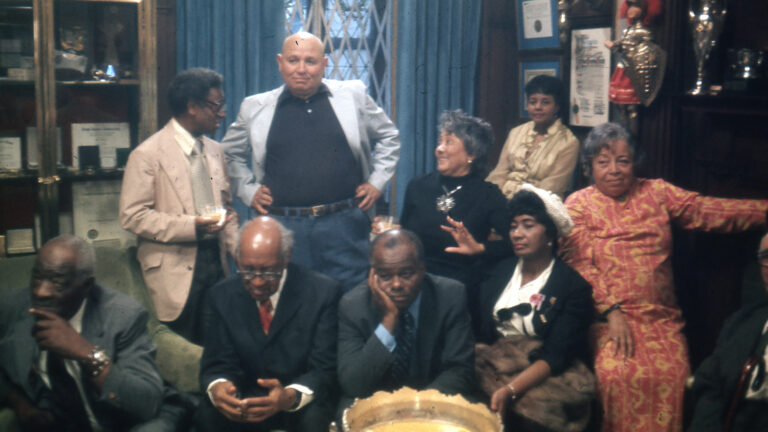
Read the room. Intellectuals, artists, politicians, librarians and others gather in 1972 in a New York City brownstone owned by Duke Ellington to discuss politics, history and culture—the past, present and future. Race and the issues facing the African American community get an intense examination through the prism of the 1920s Harlem Renaissance.
At that gathering, filmmaker William Greaves captured the profound conversations. After his death in 2014, his son David, producer Liani Greaves and editors Anne de Mare and Lynn True helped fulfill his dream. The result is a reckoning.
Harlem’s ‘who’s who’ share anecdotes and memories in a perceptive, head-spinning roundtable. Greaves’ original 16mm camerawork is so inviting that audiences feel like welcome guests. They’ll likely feel honored to be in the company of showman Eubie Blake, artist Romare Bearden, Ida Mae Cullen and photographer James Van Der Zee. Revelations flow for an ethereal 100 minutes.
One of the most astonishing biographies is that of actor Leigh Whipper, who was in his 90s at the time. Remarkably alert, he recalls working in minstrel shows, vaudeville and drama before helping establish the groundbreaking Negro Actors Guild. When an attendee reveals that his mother was enslaved, the gathering’s enormity and gravitas expand.
Wisdom about Marcus Garvey’s Back-to-Africa movement and whether to use the terms Negro, Black or African American is passed on and deeply felt. A hush comes over the room—and will in theaters, too.
This poignant documentary reaches into the past through firsthand experiences. Superlative documentary filmmaking. What began more than 50 years ago arrives right on time. It’s a treasure. A national treasure.
Your Mother, Your Mother, Your Mother ()**

The Muslim world is rarely explored in film, so this glimpse could be enlightening. Could be.
Pakistani American and Texan screenwriter-director Bassam Tariq proved adept at exploring cultural clashes with his FIPRESCI award-winning feature debut, Mogul Mowgli. Yet something seems off in this urban crime-drama fable focused on faith-loving hitman Latif (Mahershala Ali, Moonlight, Green Book). He’s devout, devoted to family and capable of murder—by blade only. He has standards.
The script quickly tests Latif’s sensibilities. Bludgeon a dude in a bathroom for money, then head home to discover he’s now the sole head of his household. Becoming a patient dad to his rebellious teen Fatiha (Adia), a role model to eight-year-old Qadir (Jahleel Kamara) and a scavenger for infant daughter Aziza, who demands breast milk only, puts his professional skills to the ultimate test. He’s dad and mom now.
The crime-and-religion premise has potential. Unfortunately, the script’s promise ends shortly after its opening sequence as situations become increasingly absurd and poorly thought out. Most egregious: A character is shot in the chest three times, then gets up and walks away like nothing happened. Like he’s in a cartoon.
Tariq’s direction has as many tonal issues as the script. Satire? Comedy? Gruesome crime thriller? Family drama? The Texas setting is fascinating but underused. When Son Lux’s score outshines the cinematography (Katelin Arizmendi), production design (Akin McKenzie) and costumes (Deirdra Elizabeth Govan), the audio overwhelms the visuals. Never a good sign.
John Cho overacts as an evangelist stuck on his own hype. Giancarlo Esposito is fine in a film that is not. Adia’s Fatiha is off-putting for too long. Blame the writing, not the actors. But still.
Why weren’t these problems addressed in the screenplay or during editing by Cam McLauchlin? Mahershala Ali’s role choices are usually impeccable. Here, the promising premise, characters and setting don’t reach their potential and let the actor down. Misguided storytelling and direction will do that. Pity.
(For more information about the Toronto International Film Festival, visit <TIFF.net>. Visit film critic Dwight Brown at <DwightBrownInk.com>.)