

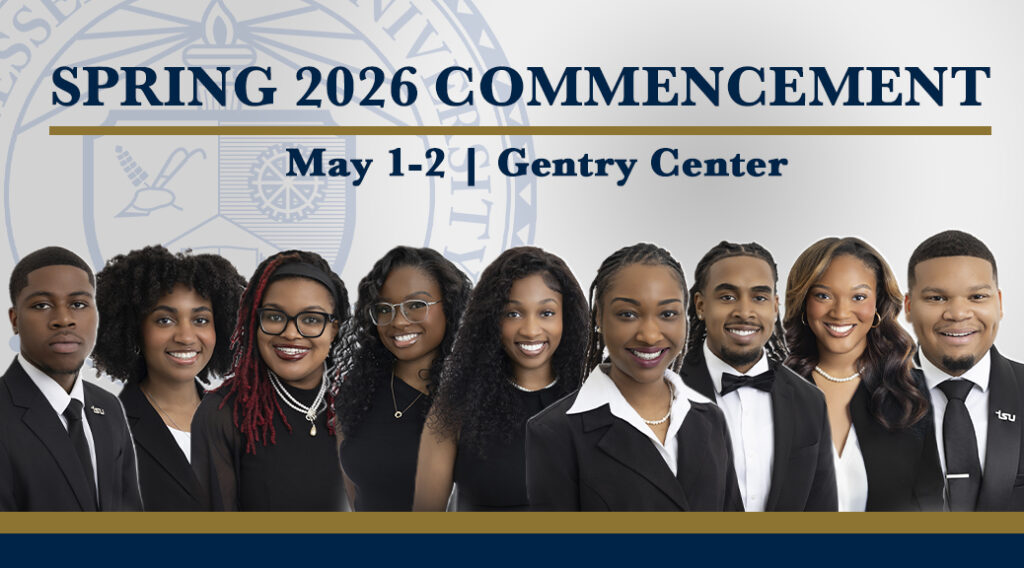
Tennessee State University announces its Spring 2026 commencement ceremonies, set to take place over two days, May 1-2, in the Gentry Center Complex. This year, the university will honor nearly 1,400 graduates, its largest class in several years, comprising around 200 graduate students and approximately 1,200 undergraduates across diverse disciplines.
In line with the university’s commitment to promote student engagement and empowerment, this year’s ceremonies will highlight selected student speakers from each college, providing them with a platform to share their unique stories and experiences. The initiative continues President Dwayne Tucker’s vision of a reimagined TSU that prioritizes student voices and leadership.
“Our Spring 2026 commencement ceremonies celebrate not only the academic accomplishments of our graduates but also embody our steadfast commitment to engaging and empowering our students,” President Tucker said. “By allowing our graduates to share their stories, we are investing in their futures and enhancing the vibrant TSU community. This initiative reflects a pivotal shift in our approach, moving away from past traditions where student voices were seldom heard.”
The commencement schedule is as follows: Friday, May 1: 8 a.m. – Colleges of Business and Public Service; 1 p.m. – Colleges of Agriculture and Engineering; 6 p.m. – College of Education and the School of Graduate and Professional Studies. On Saturday, May 2 – 8 a.m. – College of Health Sciences; – 1 p.m. – Colleges of Liberal Arts, and Life and Physical Sciences. The TSU Honors College will host a special ceremony Thursday, April 30, at 3 p.m. in Gentry Center Complex to celebrate all students in the honors program (previously known as the Honors Convocation). For additional information about the Spring 2026 commencement ceremonies, please visit www.tnstate.edu/records/commencement/.
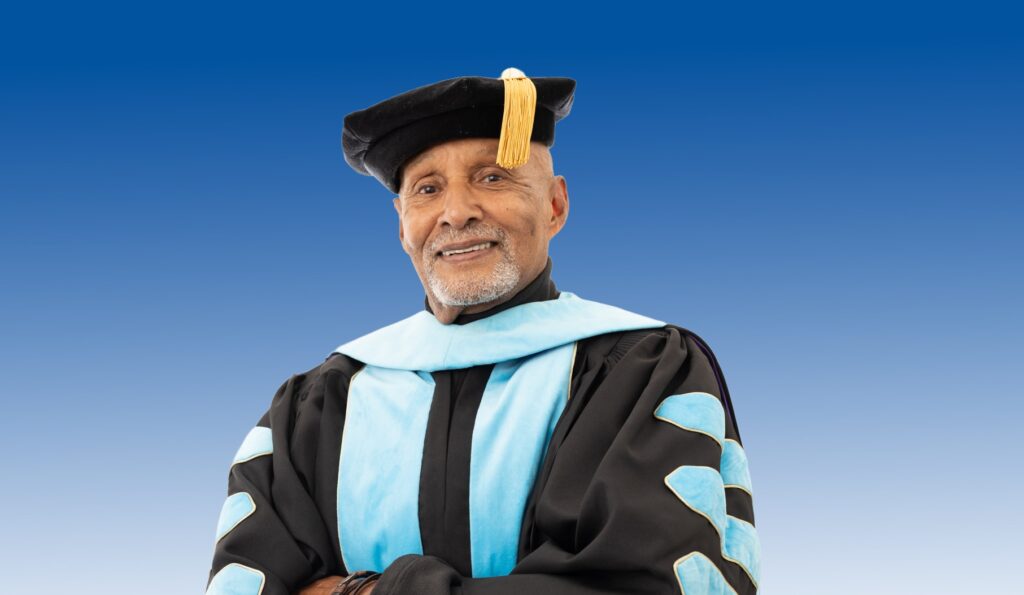
An 85 year old Navy Veteran and Lifelong Learner, Dr. Charles Whitman Dabbs will receive his Doctor of Education in Higher Education Leadership, proving that the pursuit of knowledge has no expiration date.
“I’m not the kind of person who can just sit at home and do nothing,” says Dabbs. “I’ve always wanted to earn a doctorate, but the time was never right. When the pandemic slowed everything down, I finally had the time, and I took it.”
A Los Angeles native, Dabbs’ journey began at age 17 when he joined the U.S. Navy. Serving as a hospital corpsman, he found the discipline that would fuel a 50-year career in federal service, including roles with the Department of Veterans Affairs and the Department of Defense. Along the way, he earned a bachelor’s degree in sociology and two master’s degrees from UCLA, all while working full-time.
For Dabbs, education is a “family DNA” forged by his father, who grew up in the Jim Crow South without access to formal schooling. Today, Dabbs celebrates 63 years of marriage, two highly educated children, and five grandchildren. His bond with TSU is a legacy of its own; his son earned an MBA from the university, and Dabbs was inspired by a neighbor who attended TSU in the 1950s. Despite the age gap between him and his classmates, Dabbs found a home at TSU.
“I thought I might be overlooked, but it was just the opposite,” Dabbs recalled. “The students embraced me. They helped me with technology, and in return, I shared perspectives from living through history they had only read about in textbooks. There was a beautiful intergenerational connection.”
With his Ed.D. in hand, Dabbs has no intention of slowing down. He plans to transition into leadership at an HBCU, focusing on mentorship.
“Many students just need someone in their corner,” he said. “I want to help them see that with focus and resilience, they can succeed. It’s never too late to do something meaningful.”