

Nashville’s civil rights history and civic future converged April 19 as hundreds gathered downtown for the 4th annual Diane Nash Commemorative March and the launch of a new ‘City Hall and Public Square’ digital tour, both centered around the historic Courthouse and Public Square.
The day’s events marked 66 years since the 1960 bombing of civil rights attorney Z. Alexander Looby’s home, an act that prompted thousands of demonstrators (led by student activist Diane Nash) to march silently to the courthouse demanding accountability from city leadership.
This year’s commemoration began with a ‘Celebration of Courage’ at First Baptist Church, Capitol Hill, before participants proceeded in silence through downtown, retracing the path of the original protest. The march concluded at Diane Nash Plaza, adjacent to the historic Courthouse and City Hall, echoing the site of the 1960 demonstration.
“In honor of the silent protest led by Diane Nash and her peers during their 1960 march to the courthouse, this year’s march was also held in silence,” organizers noted, emphasizing the continued relevance of civic courage and collective action.
Held under the theme ‘Prepared for the Moment,’ the event highlighted leadership, youth engagement and community reflection. Students across the city participated through the Diane Nash Creative Competition, submitting work in speech, visual art and other formats to honor Nash’s legacy.
Following the march, attention shifted to the steps of the historic Courthouse and City Hall, where city officials and community leaders gathered for a celebration marking the launch of Nashville Sites’ new ‘City Hall and Public Square’ tour.
Hosted on <NashvilleSites.org>, the free digital experience offers a self-guided look at one of the city’s most significant civic spaces, tracing its evolution from early structures in the 18th century to the current Art Deco limestone courthouse completed in 1937. The building now houses offices for Mayor Freddie O’Connell, the Metropolitan Council and local courtrooms.
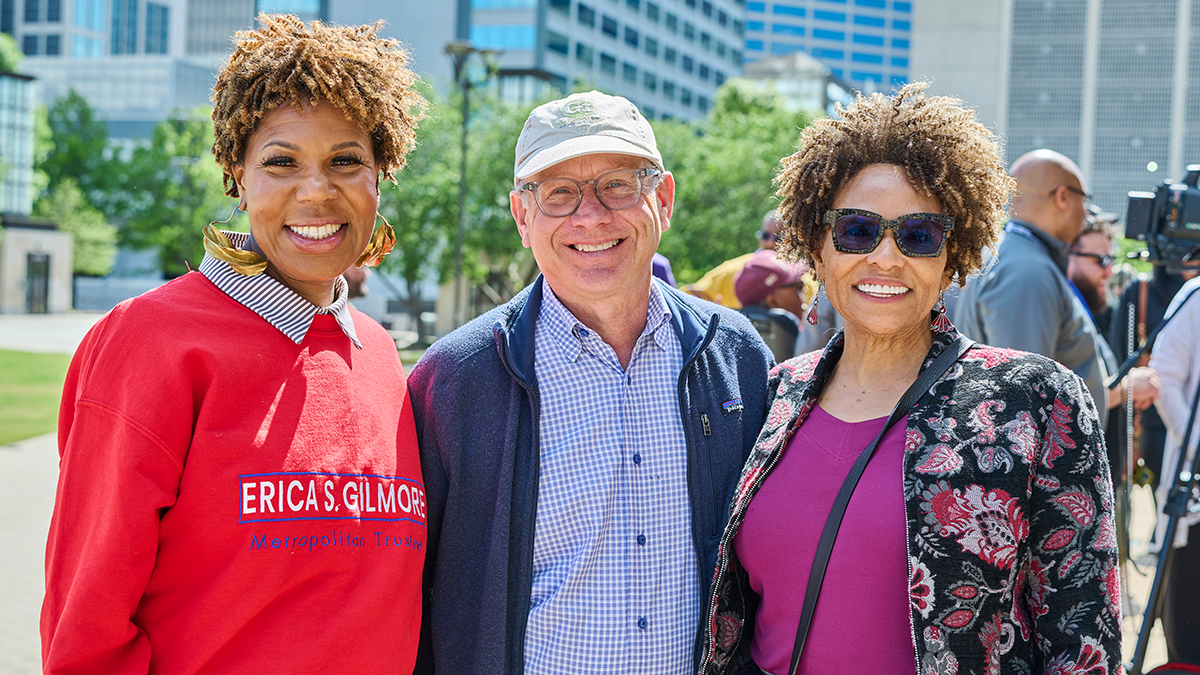
Vice Mayor Angie E. Henderson, who participated in both the march and the tour launch, said the project expands access to Nashville’s civic history.
“As someone who has given many tours and civic education presentations within this building, I am pleased to see this project come to completion,” Henderson said. “Nashville Sites will help more Nashvillians access our city’s history.”
The tour, developed by historians, students and interns, features narration from Mayor O’Connell and Henderson and is available in English, Spanish and Arabic. Organizers say the platform is designed to make local history more accessible through mobile-friendly storytelling, historic images and interactive maps.
Dr. Mary Ellen Pethel, executive director of Nashville Sites, said the project connects residents to the spaces where key moments in the city’s democratic history have unfolded.
“Through Nashville Sites, we’re bringing the stories of City Hall and Public Square to life in ways that are accessible, engaging and grounded in strong historical research,” Pethel said.
The shared April 19 date underscored the connection between past and present. The same courthouse steps that once served as the destination for a pivotal civil rights protest now serve as a place of reflection and education for a new generation.
“We honor Z. Alexander Looby through this new tour,” said Dr. Learotha Williams, Jr., Davidson County historian and Tennessee State University professor. “Many of the rights and privileges we enjoy today are the result of his unwavering devotion to equality.”
Together, the commemorative march and the launch of the digital tour highlighted Nashville’s ongoing effort to preserve its history while encouraging civic engagement—inviting residents not only to remember the past, but to walk in its footsteps.
Metro Nashville launches ‘City Hall & Public Square’ tour with community celebration
The Metropolitan Government of Nashville and Davidson County marked the launch of a new virtual and audio walking tour, ‘City Hall and Public Square,’ with a community celebration held April 19 on the steps of the historic Courthouse and City Hall.
Hosted on the free digital platform <NashvilleSites.org>, the tour offers residents and visitors an inside look at one of the city’s most significant civic spaces. It traces how the history of the Davidson County Courthouse and Public Square reflects Nashville’s growth and evolving civic life, from early wooden and brick structures in the 18th and 19th centuries to the 1937 Art Deco limestone building that centralized local government operations.
The building, listed on the National Register of Historic Places, houses the offices of Mayor Freddie O’Connell, the Metropolitan Council and Circuit and Chancery courtrooms.
“As someone who has given many tours and civic education presentations within this building, I am pleased to see this project come to completion,” said Vice Mayor Angie E. Henderson. “Nashville Sites will help more Nashvillians access our city’s history.”
Developed by a team of historians, graduate students and interns, the tour features narration by Mayor O’Connell and Vice Mayor Henderson. It is the first Nashville Sites tour offered in the city’s three most widely spoken languages: English, Spanish and Arabic. The Spanish version was translated and narrated by Belmont Honors student Daniela Barranco Cornejo, while the Arabic version was edited by Roua Mohamed and narrated by her mother.
“Through Nashville Sites, we’re bringing the stories of City Hall and Public Square to life in ways that are accessible, engaging and grounded in strong historical research,” said Dr. Mary Ellen Pethel, executive director of Nashville Sites. “This tour connects people to the civic spaces where Nashville’s democratic history has unfolded.”
The launch date also carried historical significance. On April 19, 1960, following the bombing of the home of civil rights attorney Z. Alexander Looby, more than 3,000 demonstrators marched silently down Jefferson Street to the courthouse to confront then-Mayor Ben West over escalating racial violence. The protest became a defining moment in Nashville’s Civil Rights Movement.
“We honor Z. Alexander Looby through this new tour,” said Dr. Learotha Williams, Jr., Davidson County historian and Tennessee State University professor. “Many of the rights and privileges we enjoy today are the result of his unwavering devotion to equality.”
Nashville Sites is a free, expert-curated digital platform offering more than 45 self-guided walking, driving and virtual tours exploring the city’s history and culture. The tours are accessible on any device without the need to download an app and combine narrative, historic images and interactive maps.
The ‘City Hall and Public Square’ tour expands the platform’s growing catalog of experiences designed to make local history accessible to a wider audience. The initiative is a signature project of the Nashville Historical Foundation in partnership with the Metro Historical Commission.