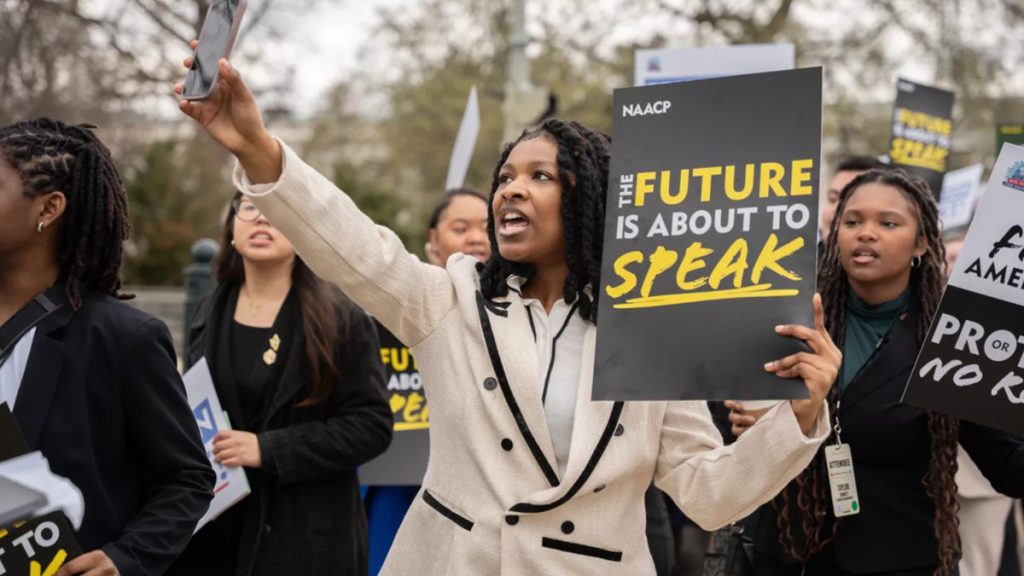
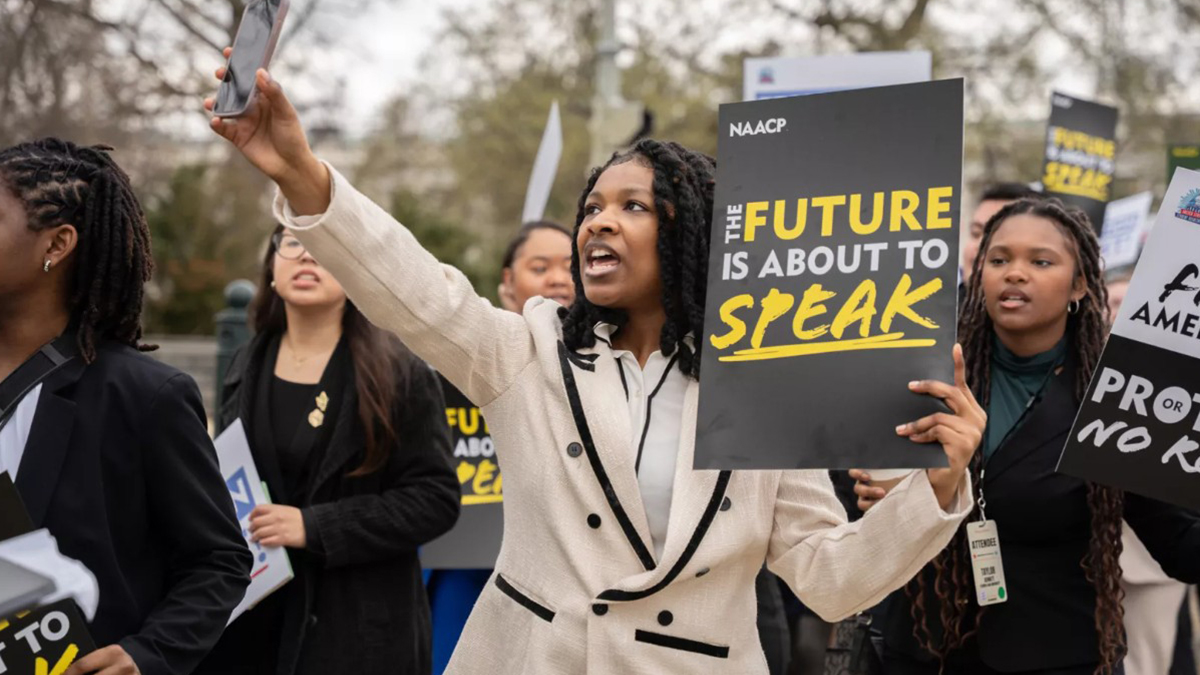
The NAACP, National Urban League and National Immigration Law Center are calling on Senate leaders to reject testimony from Daily Wire reporter Luke Rosiak, accusing him of promoting racially biased narratives and misinformation about government programs that benefit minority communities.
In a joint letter sent to the Senate Small Business and Entrepreneurship Committee, the organizations criticized Rosiak’s appearance as a witness during a hearing titled “Blowing the Whistle: Inside the Grift that Keeps Giving.” The groups argued that Rosiak has repeatedly used Senate hearings to attack programs designed to assist minorities, immigrants and low-income families while relying on inflammatory rhetoric and selective examples.
“Luke Rosiak has a documented pattern of abusing Senate hearings to amplify racist narratives that stigmatize communities of color,” said Patrice Willoughby, chief of policy and legislative affairs for the NAACP.
The organizations specifically criticized Rosiak’s comments targeting Medicaid home care programs and federal minority business contracting initiatives. According to the letter, Rosiak portrayed programs supporting family caregivers and minority-owned businesses as inherently corrupt while disproportionately focusing attention on non-white participants.
Civil rights leaders argued that Rosiak ignored federal data showing that healthcare fraud is overwhelmingly committed by providers and businesses rather than by beneficiaries receiving care. Georgetown University data cited by the groups showed that among individuals sentenced for healthcare fraud in 2024, 45% were white, 21% were Black and 15% were Hispanic.
The organizations also pushed back against Rosiak’s criticism of the federal government’s 8(a) contracting program, which was created to help historically disadvantaged businesses compete for federal contracts. During his testimony, Rosiak described the program as corrupt and argued that minority set-aside contracts disproportionately benefit wealthy contractors rather than struggling small businesses.
Rosiak repeatedly focused his testimony on Indian American business owners participating in the program, criticizing what he described as “wealthy” minority contractors receiving federal opportunities. He also compared aspects of federal contracting to corruption in foreign governments and argued the program allows companies to bypass competitive bidding rules.
Advocacy groups said those arguments ignored the historical purpose of the program and unfairly painted minority-owned businesses as undeserving or fraudulent.
The organizations further argued that Rosiak lacked expertise in healthcare, caregiving policy and economic equity issues, making him an inappropriate witness for congressional hearings involving programs that impact vulnerable communities.
The dispute comes as race-conscious contracting programs face growing legal scrutiny following recent court rulings connected to the Supreme Court’s Students for Fair Admissions decision. Rosiak told senators that federal minority contracting programs may soon require major revisions because of constitutional challenges currently working through the courts.
Civil rights organizations, however, warned lawmakers against allowing what they described as racially charged attacks to shape public policy discussions.
“The Senate has a responsibility to uphold testimony accuracy and protect the legitimacy of public institutions,” Willoughby said. “Giving a platform to someone who peddles false, racially charged claims debases the Senate.”