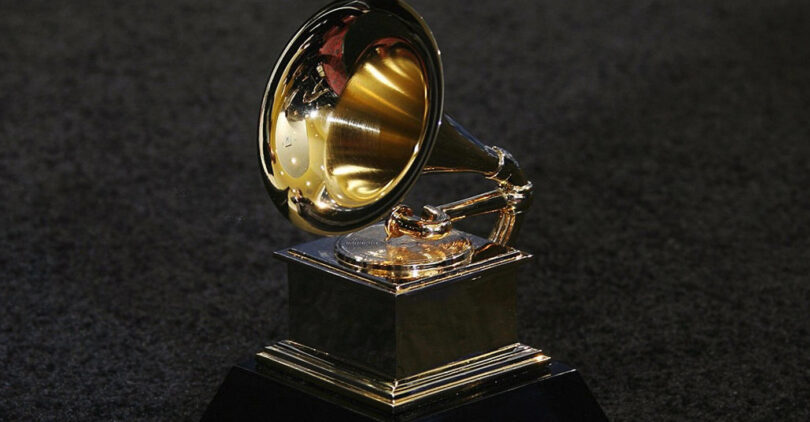
The Grammy Awards have issued changes to address how artificial intelligence (AI) affects music.
Among the revisions is a rule stating that only “human creators” are eligible to win the music industry’s highest honor.

According to the Associated Press, under the newly released ‘Artificial Intelligence (AI) Protocols,’ a work lacking human authorship will be deemed ineligible for any category.
AI-inspired works will be accepted if a human creator has made a significant contribution to the music or lyrics, according to decisions made at last month’s Academy Board of Trustees meeting.
The requirements specify that the human authorship component must be significant.
Paul McCartney recently announced that a new Beatles record was created using artificial intelligence technology by using an old demo of John Lennon’s voice.
The utilization of AI in music has garnered attention in recent years, with instances where AI has regenerated or even impersonated artists like the late Notorious B.I.G and the imprisoned R. Kelly.
Even family members of the late King of Pop, Michael Jackson, have publicly doubted some of his posthumous releases as authentic.
These developments have prompted the Recording Academy to ensure integrity and human involvement in the creative process.
In addition to the AI rule, the Recording Academy has made changes to other categories.
In the Album of the Year category, a music creator must now account for at least 20% of the work to be eligible for a nomination.
That includes all credited artists, featured artists, songwriters, producers, engineers, mixers, and mastering engineers.
The modification differs from a decision made in 2021, which allowed anyone who worked on the album to receive a nomination.
Nominees eligible for the ‘Big Four’ categories, Best New Artist, Album of the Year, Song of the Year, and Record of the Year, have been reduced from 10 to eight.
The academy said it aims to streamline the competition and enhance the prestige of being nominated in these highly coveted categories.
The Recording Academy has also revised the requirements for the ‘Best Music Film’ category.
Previously, 50% of the documentary footage had to be performance-based, but this requirement has now been lifted to accommodate the evolving music documentary format.
The change acknowledges that music documentaries often combine actual and archival footage, as seen in Apple TV’s Billie Eilish: The World’s a Little Blurry.
However, biopics and dramatic feature films remain ineligible for this category. Music videos that are part of a visual album are now eligible for awards, as seen with Beyoncé’s Lemonade film in 2016.
The Recording Academy said it updated its system to keep up with changes in music creation and maintain high standards for the Grammy Awards.
Officials said that by limiting AI’s role in music and refining the criteria for various categories, the academy seeks to celebrate and honor the enduring power of human creativity in the industry.