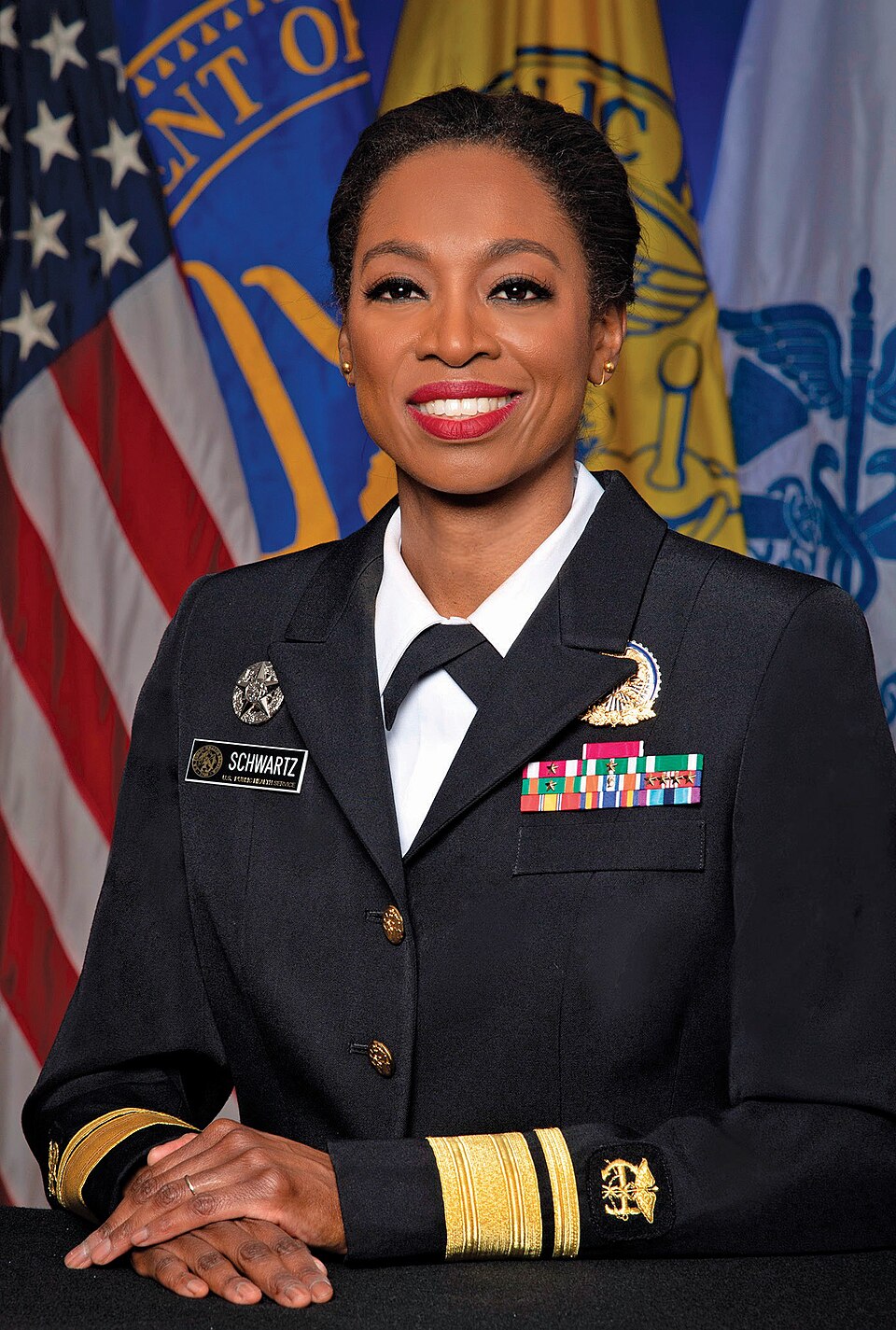
ATLANTA, Ga. — The U.S. Senate has confirmed Dr. Erica Schwartz as director of the Centers for Disease Control and Prevention, placing a veteran physician and former deputy surgeon general at the helm of an agency confronting major workforce losses, declining morale and questions about political influence over public health policy.
Schwartz was confirmed Aug. 5 by a 51-44 Senate vote, becoming the 22nd director of the Atlanta-based CDC and its first permanent leader in nearly a year.

She takes over at a particularly challenging time for one of the nation’s most important public health agencies.
The CDC has lost more than 3,000 employees through layoffs and resignations since President Donald Trump returned to office, amounting to more than one-quarter of its workforce. The agency also has experienced a succession of temporary leaders, while political appointees with limited backgrounds in medicine or public health have taken positions in its front office.
At the same time, the CDC is responding to public health threats that include surging measles cases, Cyclospora-related illness and Ebola outbreaks in the Democratic Republic of Congo and Uganda.
Much of the debate surrounding Schwartz’s nomination centered not on her qualifications, but on whether she would be willing to defend the CDC’s scientific independence if confronted with political pressure.
During her July confirmation hearing, senators questioned how Schwartz would respond if Health and Human Services Secretary Robert F. Kennedy, Jr. sought CDC action that was not supported by scientific evidence.
Sen. Bill Cassidy, R-La., chairman of the Senate Health, Education, Labor and Pensions Committee, initially raised concerns about Schwartz’s answers. He later supported her nomination after additional conversations with Schwartz and people who had worked with her.
Democrats and independents remained more skeptical.
Sen. Bernie Sanders, I-Vt., praised Schwartz’s credentials and public service but voted against her nomination, arguing that she had not demonstrated that she was prepared to challenge Kennedy over disputed claims involving vaccines and other public health issues.
During her confirmation hearing, Schwartz pledged that science would remain central to her leadership.
“My sacred responsibility is to provide the American people with public health guidance that is clear, honest and evidence-based,” Schwartz said.
Schwartz brings decades of medical, military and public health experience to the position.
She earned her medical degree from Brown University, a Master of Public Health from the Uniformed Services University of the Health Sciences and a law degree from the University of Maryland.
Her career included service in the U.S. Navy and the U.S. Public Health Service Commissioned Corps. She later became chief medical officer for the U.S. Coast Guard, overseeing its health system, before serving as deputy surgeon general from 2019 to 2021.
Most recently, Schwartz served as president of Insurance Solutions for Medicare and Retirement at UnitedHealthcare from 2022 until June 2026.
President Trump nominated her to lead the CDC in April.
Beyond the political debate, Schwartz faces the immediate task of rebuilding an agency shaken by staff departures, leadership turnover and questions about its independence.
Former CDC Director Dr. Mandy Cohen said Schwartz will have to navigate the intersection of politics and science while restoring confidence among the agency’s workforce.
Cohen recommended that Schwartz maintain a strong presence at the CDC’s Atlanta headquarters, work closely with Congress and communicate frequently with the American public about the agency’s response to disease outbreaks and other health threats.
Other public health leaders have said one of the clearest tests of Schwartz’s tenure will be whether she publicly advocates for evidence-based health policies (including vaccines) when scientific conclusions conflict with political priorities.
Schwartz now assumes responsibility for an agency whose decisions affect everything from infectious disease surveillance and vaccination recommendations to emergency preparedness and the nation’s response to emerging health threats.
Her challenge will be not only managing those responsibilities, but restoring confidence that the CDC’s guidance is being driven by science.