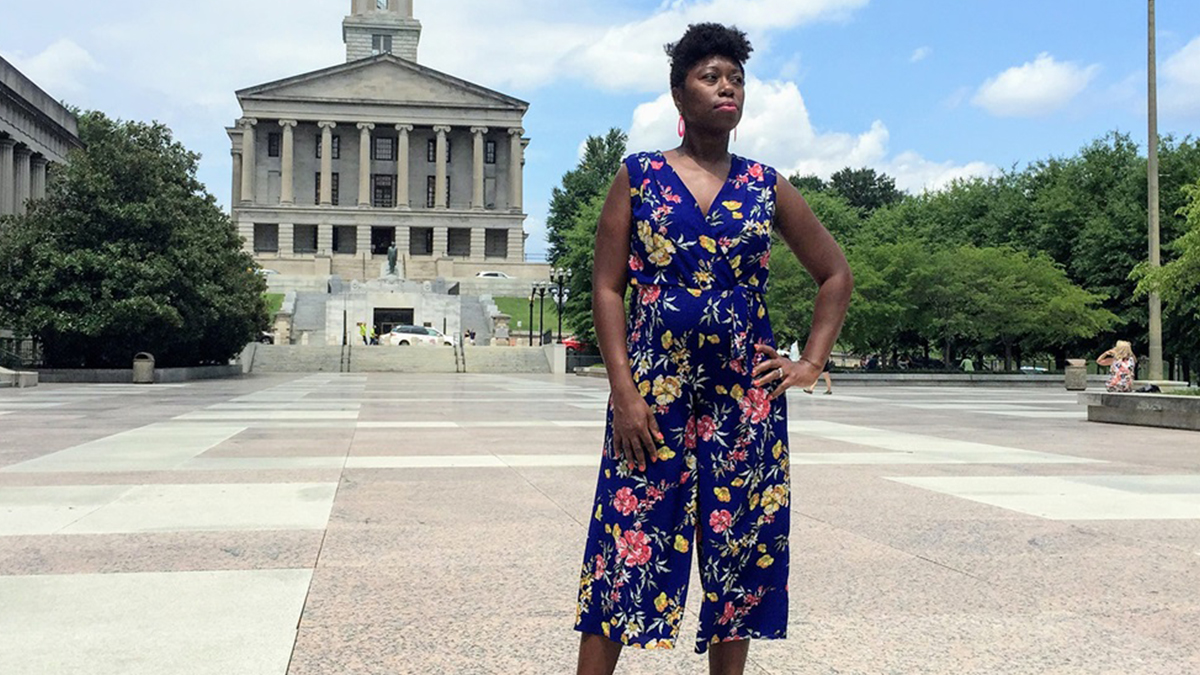
Moving to northern Maine solved one problem.
It allowed my daughter Britt and me to own a home again.
But it couldn’t replace everything we had left behind.
Madawaska, Maine, is a beautiful little town of about 1,000 people tucked along the Canadian border. Our home overlooks the St. John River, with New Brunswick just across the water. The scenery is breathtaking, the winters are long and snowy, and our neighbors have welcomed us with a kindness we’ll never forget.
One neighbor routinely clears our driveway after snowstorms. Others pointed us toward community resources when money became tight. In many ways, the people here remind me of the friendliness I grew up with in Tennessee.
But life in rural Maine also comes with challenges.
The nearest hospital is nearly 30 miles away, and specialists require an hour-and-a-half drive in the other direction. Shopping is limited, and many everyday services are an hour or more from home. Heating a house through a Maine winter is expensive, and like many retirees living on fixed incomes, we’ve relied on programs such as SNAP and heating assistance to make ends meet.
We’re grateful those programs exist.
Even so, I often think about how different life might have been if I had simply been able to remain in Nashville.
I didn’t leave because I wanted a new adventure.
I left because I couldn’t afford to stay.
That distinction matters.
When people hear the word ‘gentrification,’ they often think about new apartments, upscale restaurants, and rising property values. Those things may be signs of economic growth, but they also have another side.
They can quietly erase communities.
They can separate neighbors who have known each other for decades.
They can push lifelong residents farther and farther away from the places where they built their lives.
In my case, they pushed me more than 1,400 miles from home.
I miss Nashville every day.
I miss directing community theater productions and reviewing plays. I miss the friends I spent decades working alongside. I miss walking along Second Avenue. I miss attending services at Christ Church Cathedral. I miss being close enough to visit family without planning an expensive trip.
I miss being able to attend weddings, reunions, birthdays, and funerals without thinking about the distance.
Those are things no real estate transaction can replace.
Ironically, selling my Nashville condo helped me become debt-free. For that, I’ll always be thankful. But it also marked the end of a chapter I never wanted to close.
The city I loved had changed. Or perhaps more accurately, it had become a city I could no longer afford.
I know my story isn’t unique.
Thousands of longtime Nashvillians have watched neighborhoods transform before their eyes. Many families, particularly in historically Black communities such as Jefferson Street, experienced displacement decades before I did. Their stories deserve to be remembered because they reveal the human side of redevelopment that statistics alone cannot capture.
Growth is inevitable.
Cities change.
Neighborhoods evolve.
But as Nashville continues to prosper, I hope we never lose sight of the people who built the city long before it became one of America’s fastest-growing places.
Progress should create opportunity, not force people to leave the communities they helped shape.
Today, when I sit on my front porch in Maine and look across the river into Canada, I’m grateful to have a roof over my head and a community that has welcomed us.
But a part of my heart is still in Nashville.
Home isn’t just where you live. Sometimes it’s the place you never wanted to leave.
(This three-part series has been edited for print. Readers who would like to read Bill Dorian’s complete, unedited account, including additional reflections and experiences not included in this newspaper version, can find the full story online by clicking HERE)