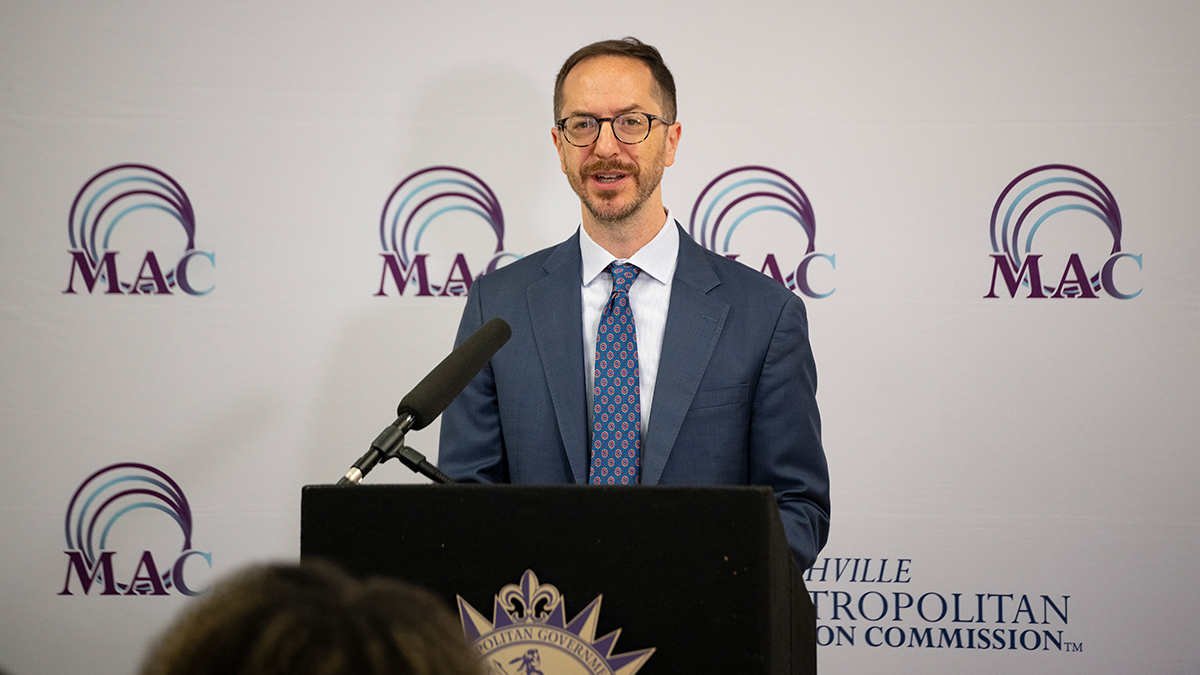
Nashville’s response to an unprecedented ice storm was strong at the front lines, but improvements are needed in emergency planning, communication and coordination to better prepare the city for future large-scale disasters, according to an interim report released by Mayor Freddie O’Connell’s Winter Storm Response Commission.
The commission released its findings Aug. 14 following 12 public hearings, a review of hundreds of records related to emergency planning and response, and nearly 60 interviews with first and second responders, community partners, subject matter experts and residents.

The review examined the response of Metro departments and Nashville Electric Service (NES) and identified areas where the city performed well as well as weaknesses that could become more significant as Nashville continues to grow.
“Our goal in creating this commission was to get an honest assessment of our whole of government and key partner performance to ensure that we will be even better positioned to serve Nashvillians when the next disaster strikes,” O’Connell said. “Our office looks forward to the commission’s full report, and I’m ready to get to work addressing their interim findings.”
O’Connell requested an interim report within six months so Metro could begin addressing problems before the commission completes its work.
Among the most significant findings is a need for improved communication and collaboration between Metro and NES, particularly before and immediately following major weather events. The commission said residents need clearer information about anticipated power restoration times during extended outages.
The report also identified a need for stronger coordination with nongovernmental organizations, including Voluntary Organizations Active in Disaster (VOAD), as well as neighborhood and community organizations.
Reaching vulnerable residents and Nashville’s non-English-speaking communities was another area identified for improvement.
The commission issued one formal recommendation in the interim report: Metro should commission an independent professional assessment of the Office of Emergency Management’s structure, staffing, organization and resources.
Such a review, the commission said, could determine whether Nashville’s emergency management operation is adequately positioned to modernize and adapt as the city’s population and emergency-response needs grow.
Despite the concerns, the report found several strengths in Nashville’s storm response.
Commission members highlighted the adaptability of front-line employees and the institutional knowledge within agencies including the Office of Emergency Management, Nashville Department of Transportation and Multimodal Infrastructure and Metro Water Services.
The commission characterized the overall response as tactically strong while raising broader questions about Nashville’s ability to manage prolonged, large-scale emergencies.
“The overall storm response picture that has emerged is one of strong tactical responses to the ice storm emergency,” the commission wrote in its executive summary.
However, the report questioned whether the emergency management structures of NES and Metro Nashville (including planning, staffing, training, coordination, information management, communications and organizational capacity) are sufficient for the needs of a modern and growing Nashville.
The interim findings are not the end of the commission’s review.
Commission members will continue interviewing representatives of key agencies and examining how other cities organize and fund their emergency management operations. The commission will also study how other municipalities coordinate emergency response with semi-autonomous agencies similar to NES.
The final report is expected to expand on the interim findings and include additional recommendations for changes to Nashville’s emergency preparedness and response system.
Under the commission’s mandate, the final report must be completed by Feb. 23, 2027.