TriceEdneyWire.com –– I woke up Monday thinking about Troy Davis. Fifteen years ago, Georgia executed him. He was innocent. I was outside the prison that night.
As the old song goes, that’s the night the lights went out in Georgia.

No physical evidence tied Troy to the killing of Officer Mark MacPhail. The case rested on eyewitnesses. Seven of the nine later recanted or changed their accounts. Several swore the police had pressured them. They pointed instead to another man at the scene, theman who first gave police Troy’s name. One witness testified he saw that man fire the shots.
Good people spoke up. William Sessions, who ran the FBI (Federal Bureau of Investigation) under three presidents, wrote that the case was permeated in doubt. Bob Barr, a Republican who supports the death penalty, wrote that condemning a man on the skimpiest of evidence does not serve justice. I am grateful to them. But they did not have what I had. I worked that case for 15 years. I read the affidavits myself. I did not come away with doubt. I came away certain. Georgia killed the wrong man.
Troy saw what we could not. He kept telling us the only way to break the killing machine was to make the country watch it work. So we built our campaign around a hashtag, #TooMuchDoubt. His execution became the second most tweeted event on earth that year. Weeks later, Gallup found support for the death penalty at a 39-year low.
The next spring, Connecticut abolished the death penalty with a horrific murder case still in the headlines. Troy made that possible. A year later, Maryland became the first state south of the Mason-Dixon Line to abolish. I watched that vote from the Senate balcony in Annapolis, beside Kirk Bloodsworth. Maryland had sent Kirk, a White waterman and former Marine, to death row for a murder he did not commit. DNA freed him. Virginia followed in 2021, the first state of the old Confederacy to abolish.
Then we stopped. No state has abolished the death penalty since Washington struck it from its books in 2023.
The machine kept running. Since 1973, at least 203 people have been exonerated from death row. For every eight people executed, one has been exonerated. Two years ago Missouri executed Marcellus Williams, after the very prosecutor’s office that convicted him asked a court to throw out the conviction.
The death penalty preys on the poor. About 95% of the people on death row could not afford a lawyer.
Lynching still haunts us. At least 10 Black people have been found hanging this year. Most have been ruled suicides. Their families want independent reviews. This month Congresswoman Ayanna Pressley and 59 colleagues asked the Justice Department and the FBI to investigate every one.
Frederick Douglass is often called the father of the civil rights movement. He was the first civil rights leader to call publicly for abolishing the death penalty. He said its roots were intertwined with the roots of the lynching tree. Both had to be cut down.
I learned the path 30 years ago at the National Coalition to Abolish the Death Penalty. The Eighth Amendment bans cruel and unusual punishment. The Supreme Court judges what is unusual by looking at the states. In 2005, once most states had barred executing children, the Court ended the practice. The threshold for ending the death penalty is 26 states.
We have 23. We need three.
Ohio is closest. Its Republican governor, Mike DeWine, has not carried out a single execution. In June he called for abolition. Pennsylvania’s governor, Josh Shapiro, refuses to sign death warrants. North Carolina has not executed anyone in 20 years.
Much of the country is moving the other way. States executed 47 people last year, the most since 2009. Florida alone killed 19. In January2025 the president signed an order pressing states to seek more death sentences.
These are hard times. We carry many fights. We cannot set this one down.
Two weeks before he died, Troy asked me to be an uncle to his nephew, De’Jaun. I said ‘yes.’ I had known him since he was three. Today he is an engineer, helping build a dental school in Savannah, his uncle’s hometown. Troy should have lived to see it.
Three states. Call your governor. Call your legislators. Douglass told us to cut down both trees. One is still standing. And it is time for the lights to stay on in Georgia.
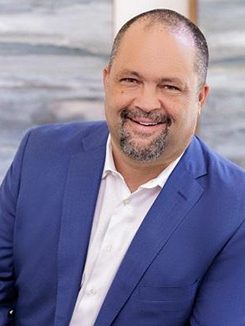
(Ben Jealous is a Professor of Practice at the University of Pennsylvania and a former national president of the NAACP. He is the author of Never Forget Our People Were Always Free: A Parable of American Healing.)